
The success of your entire manufacturing operation can hinge on a single, critical role: the Plant Manager. Yet, the process is often fraught with uncertainty, leaving many leaders wondering how to hire a plant manager who can truly drive performance in today’s complex industrial landscape. A mis-hire at this level doesn’t just cost time and money; it can disrupt production, compromise safety, and stall growth, making the search a high-stakes endeavor for any manufacturing leader.
This strategic guide is designed to replace that uncertainty with confidence and precision. We will provide a structured, step-by-step framework to move your search beyond generic job postings and into a proactive talent acquisition strategy. Follow our expert process to define the essential qualifications, source high-caliber candidates, and accurately assess the leadership skills required to drive operational excellence. By the end, you will have a clear, repeatable methodology for securing a leader who will elevate efficiency, safety, and profitability across your facility.
Key Takeaways
- Shift your approach from filling a position to solving a strategic business need by defining critical outcomes before writing the job description.
- Learn how to attract top-tier, passive candidates by transforming your job posting into a compelling marketing document that highlights impact and opportunity.
- Implement a structured assessment process that goes beyond standard questions to accurately evaluate a candidate’s real-world problem-solving capabilities and leadership potential.
- Mastering how to hire a plant manager requires a disciplined, multi-stage process that systematically de-risks your decision and secures high-impact leadership.
Step 1: Define the Strategic Need Before the Role
The most critical error in hiring a plant manager is treating the role as purely operational. A successful plant manager is a strategic business leader with direct P&L responsibility, tasked with driving performance that aligns with executive-level objectives. Therefore, the foundational step in understanding how to hire a plant manager is to move beyond a generic job description and develop a strategic role profile. Before you write a single line of a job posting, you must define what success will look like for this individual in their first 12 to 18 months. Will they be expected to spearhead a major growth initiative, execute a critical cost-reduction plan, or fundamentally improve quality and safety compliance?
Audit Your Current Operations and Future Goals
Begin with a comprehensive audit of your facility’s current state and strategic trajectory. This analysis provides the framework for the role. Identify the plant’s most pressing challenges-are they related to production efficiency, supply chain disruptions, safety culture, or employee morale? Simultaneously, define the upcoming initiatives this manager will be expected to lead, such as the launch of a new product line or the integration of advanced automation technology. From this audit, you can establish the key performance indicators (KPIs) they will own, such as Overall Equipment Effectiveness (OEE), Total Recordable Incident Rate (TRIR), and cost per unit.
This audit helps specify the manager’s required expertise. If supply chain issues are paramount, you might prioritize a candidate with a strong background in logistics and freight management. Understanding the capabilities of modern logistics partners is key, and it can be insightful to discover Gateway Cargo to see the types of bespoke solutions that a future leader could implement.
For example, a plant in the food and beverage industry might need a leader who can navigate the complexities of international distribution, often relying on expert partners like Helexo for export consolidation.
Distinguish Between Technical and Leadership Competencies
A world-class plant manager possesses a precise blend of technical expertise and executive-level leadership. The technical requirements form the foundation of their capability. A deep understanding of modern Manufacturing Operations Management principles, including methodologies like Lean and Six Sigma and proficiency with ERP systems, is often non-negotiable. However, leadership competencies are what separate an adequate manager from a transformative one. Define the critical traits needed to meet your strategic goals, such as proven change management skills, a talent for team development, and sharp financial acumen.
Create a Candidate Scorecard
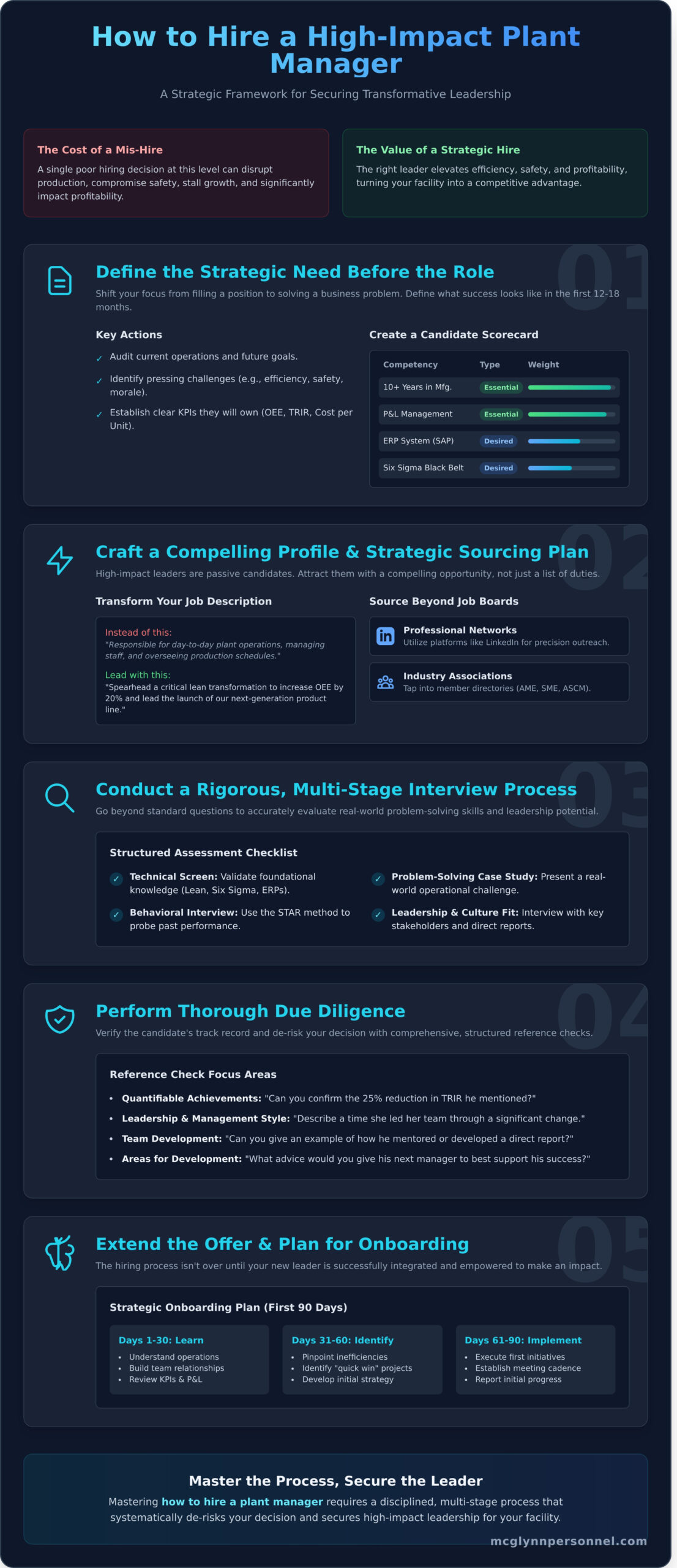
To ensure a structured and objective evaluation, translate your strategic profile into a candidate scorecard. This data-driven tool helps align all stakeholders and removes subjectivity from the hiring process. Assign a weighted value to each core competency, distinguishing between “essential” and “desired” attributes. For example:
- Essential: 10+ years in a high-volume manufacturing environment.
- Essential: Demonstrable P&L management experience.
- Desired: Experience with a specific ERP system (e.g., SAP S/4HANA).
- Desired: Black Belt certification in Six Sigma.
This methodical approach ensures every candidate is measured against the same critical business needs, leading to a hire who is precision-matched to deliver profound results.
Step 2: Craft a Compelling Profile and Strategic Sourcing Plan
The most impactful plant managers are rarely active job seekers. They are high-performing leaders, fully engaged in driving results for their current employers. Therefore, a passive “post and pray” approach is insufficient. The key to how to hire a plant manager who can truly transform your operations lies in a proactive strategy that combines a compelling opportunity with a targeted, multi-channel sourcing plan.
Writing a Job Description That Attracts Leaders
Your job description must function as a marketing document, not a simple list of duties. Lead with the strategic impact the candidate will have-the challenges they will solve and the goals they will achieve. Articulate the opportunity to drive significant change, such as spearheading a lean transformation or scaling production for a new product line. Detailing the company culture and the leadership team they will partner with provides crucial context that attracts candidates seeking a strong cultural fit.
Sourcing Beyond the Job Boards
To reach the passive talent pool, you must move beyond traditional job boards. A robust sourcing strategy integrates multiple channels to identify and engage top-tier candidates where they are active. We recommend a structured approach that includes:
- Professional Networks: Utilize platforms like LinkedIn for precision outreach to individuals with specific experience in your industry and a proven track record of success.
- Industry Associations: Explore the member directories of organizations like the Association for Manufacturing Excellence (AME), SME, and the Association for Supply Chain Management, which are hubs for credentialed and committed professionals.
- Employee Referral Programs: Implement a structured program to leverage your team’s network, as trusted recommendations often yield highly qualified and culturally aligned candidates.
For maximum reach and efficiency, partner with a specialist recruiter to access a network of vetted, passive candidates who are not accessible through public channels.
The Role of Confidentiality in Executive Searches
Discretion is paramount when recruiting for a leadership role like a plant manager. A public search can create internal uncertainty among your current team and signal strategic shifts to competitors. A confidential search, managed by a third-party partner, protects internal morale and your market position. This process ensures that candidates are thoroughly vetted before being introduced to your organization, maintaining stability and focus throughout the hiring process.
Step 3: Conduct a Rigorous, Multi-Stage Interview Process
A well-defined job description attracts candidates, but a structured interview process is what secures the right leader for your facility. Moving beyond generic questions is essential. The goal is to create a consistent evaluation framework that assesses not only a candidate’s stated capabilities but also their real-world problem-solving skills, leadership style, and cultural alignment with your organization. Involving key stakeholders from quality, finance, and HR provides a holistic view, ensuring the chosen candidate can collaborate effectively across departments.
Initial Screening and Phone Interview
The initial conversation serves as a critical efficiency filter. This stage should focus on verifying the non-negotiable requirements outlined in your job description. Use this time to confirm core experience, such as their background in lean manufacturing or specific compliance standards. Assess their career motivations and communication skills, ensuring there is a foundational alignment with the role’s demands and your company’s objectives before investing further time.
Behavioral and Situational Interview Questions
This is where you delve into past performance to predict future success. The key to understanding how to hire a plant manager who delivers results lies in asking for specific, evidence-based examples. Utilize the STAR method (Situation, Task, Action, Result) to guide candidates.
- Behavioral Example: “Describe a time you improved a key production KPI, like OEE or first-pass yield, by 10% or more. What steps did you take, and what was the outcome?”
- Situational Example: “Imagine a critical piece of equipment fails during a peak production shift. Walk us through your immediate response and your communication plan for stakeholders.”
Technical Assessment and On-Site Visit
A plant manager must possess deep operational acumen. An on-site visit is invaluable; observe the candidate during a plant tour. Do they ask insightful questions about your processes, safety protocols, or workflow? Their line of questioning reveals their technical depth and priorities. Consider a practical assessment, such as presenting them with a relevant operational challenge and asking for a brief presentation on their proposed solution. Involving your Head of Engineering or senior operations leaders in this stage is crucial for validating their technical expertise.
Step 4: Perform Thorough Due Diligence and Reference Checks
The interview process identifies potential, but the due diligence phase validates proven capability. This critical step mitigates risk and provides objective data to support your hiring decision. A candidate’s resume outlines their history; reference and background checks reveal their true performance, leadership impact, and integrity. For a role with significant operational and financial accountability, this structured verification is non-negotiable.
Strategic Reference Checking
Move beyond simply confirming employment dates. A strategic reference check is an invaluable tool for uncovering insights into a candidate’s work ethic, management style, and performance under pressure. We recommend contacting a mix of former direct supervisors, peers, and direct reports to gain a 360-degree perspective. Focus your questions on tangible outcomes and specific behaviors:
- Describe a time the candidate faced a significant operational challenge. How did they lead their team through it?
- How would you characterize their communication and leadership style?
- Can you provide an example of how they drove accountability for safety and quality?
- In what environment does this person perform at their best?
Evaluating Culture and Leadership Fit
The information gathered from references provides a clear lens through which to assess cultural alignment. A technically brilliant plant manager may not succeed if their leadership philosophy conflicts with your company’s core values. Analyze whether their approach to employee relations, continuous improvement, and cross-departmental collaboration will integrate seamlessly with your existing leadership team. This ensures the chosen candidate will not only perform their duties but also enhance your organizational culture.
Making the Final Selection
With all data compiled, the final step in learning how to hire a plant manager is making a confident, data-backed decision. Reconvene the hiring committee to review each finalist against the candidate scorecard developed in Step 1. This structured discussion allows stakeholders to objectively compare strengths, weigh potential risks, and build consensus around the top candidate. A unanimous decision ensures the new hire receives full organizational support from day one, setting the stage for a successful integration and long-term partnership.
For comprehensive candidate vetting and background checks that deliver clarity and confidence, trust the experts at McGlynn Personnel to ensure precision in your final selection.
Step 5: Extending the Offer and Planning for Onboarding
You have identified your top candidate, but the process is not complete. The final steps-extending a compelling offer and implementing a structured onboarding plan-are critical for securing your chosen leader and ensuring their long-term success. A misstep here can undo all your previous efforts. Successfully navigating this final stage is a crucial component of how to hire a plant manager who will deliver profound results for your operation.
Crafting a Competitive Compensation Package
To secure a high-caliber plant manager, your offer must be competitive, comprehensive, and clearly communicated. It should be benchmarked against current market data for similar roles in your industry and region. Be prepared to present a complete package that includes:
- A competitive base salary and performance-based bonus structure.
- Detailed information on benefits, including healthcare, retirement plans, and paid time off.
- Relocation assistance, if applicable, to remove barriers for the best candidate.
Approach this stage with the expectation of negotiation and be prepared to respond in a timely manner to maintain momentum and demonstrate respect for the candidate’s value.
The First 90 Days: A Strategic Onboarding Plan
A new leader’s initial three months are foundational to their future performance. A strategic onboarding plan provides the structure they need to integrate effectively. The focus should be on learning the people, processes, and culture of the facility. We recommend a phased approach:
- First 30 Days: Schedule introductory meetings with key stakeholders, direct reports, and cross-functional department heads. Focus on listening and understanding current operational challenges.
- First 60 Days: Begin a deeper dive into production processes, safety protocols, and quality control systems. Identify potential areas for efficiency gains.
- First 90 Days: Define and launch a key ‘early win’ project. This allows the new manager to build credibility, demonstrate their capabilities, and generate positive momentum.
Partnering for Success
Navigating offer negotiations requires precision and market insight. A specialist recruitment partner provides objective, data-driven intelligence on compensation to help you craft a compelling offer. Furthermore, they can act as a valuable intermediary during negotiations, ensuring a smooth and professional closing process. This final step in how to hire a plant manager is where expertise makes all the difference. Let us help you secure the manufacturing leader your business needs.
Secure Your Next Leader and Drive Manufacturing Excellence
Hiring a plant manager is a strategic imperative that directly impacts your operational efficiency, quality, and profitability. As this guide has shown, success hinges on a structured approach-from defining the strategic need before the role to conducting a rigorous, multi-stage vetting process. Mastering how to hire a plant manager is less about filling a vacancy and more about making a pivotal investment in your company’s future leadership.
This critical search demands precision and deep industry insight. As Specialists in Manufacturing & Engineering Recruitment, McGlynn Personnel utilizes a proven executive search process for leadership roles to ensure you connect with best-in-class talent. We combine our global reach with focused expertise to deliver candidates who can truly drive results. Partner with our experts to secure your next manufacturing leader.
The right leader will not just manage your operations-they will transform them. We are committed to helping you achieve that profound result.
Frequently Asked Questions About Hiring a Plant Manager
What is the average salary for a plant manager?
The average salary for a plant manager in the United States typically ranges from $110,000 to $160,000 annually. This figure varies significantly based on factors like industry, facility size, operational complexity, and geographic location. Compensation packages are often enhanced with performance-based bonuses tied to production, safety, and financial metrics. To attract top-tier talent, it is crucial to benchmark your offer against current market data for your specific sector and region.
How long does the hiring process for a plant manager typically take?
The recruitment process for a plant manager is a comprehensive undertaking that generally takes between 60 and 90 days from initial job posting to final offer. This timeline accommodates in-depth candidate sourcing, multiple interview rounds with key stakeholders, technical assessments, and thorough reference and background checks. While a faster timeline is possible, a meticulous, structured process is essential to ensure you secure a candidate with the proven capability to lead your operations effectively.
What are the most important qualifications for a plant manager in 2025?
Beyond traditional operational management, a plant manager in 2025 must possess strong digital literacy, including experience with Industry 4.0 technologies, data analytics, and automation. Critical qualifications include demonstrated expertise in lean manufacturing, supply chain optimization, and P&L management. Furthermore, exceptional leadership skills are paramount, specifically in the areas of change management, employee development, and fostering a culture of safety, quality, and continuous improvement.
What are the biggest red flags to watch for when interviewing candidates?
Key red flags include vague responses that lack specific, data-backed examples of past accomplishments. A candidate who cannot clearly articulate how they handled a significant operational challenge or failure may lack accountability. Another warning sign is an overemphasis on delegation without discussing their direct strategic involvement. Finally, any negativity toward past employers or colleagues is a strong indicator of poor interpersonal skills and a lack of professional discretion.
Should I promote from within or hire an external candidate for a plant manager role?
Promoting an internal candidate leverages their existing institutional knowledge and can be a powerful morale booster. However, an external hire often introduces fresh perspectives, new skills, and diverse industry experience that can drive transformative change. The best strategy for how to hire a plant manager depends on your immediate business objectives. If your goal is to innovate and overhaul existing processes, an external search is frequently the superior choice for bringing in new capabilities.
What is the difference between a plant manager and a production manager?
A production manager focuses specifically on the day-to-day manufacturing process-overseeing schedules, staffing, and meeting output targets on the production floor. A plant manager holds a much broader, strategic responsibility for the entire facility. This includes oversight of all departments, such as finance (P&L), maintenance, quality assurance, safety, and human resources. The production manager is a direct report to the plant manager, who is ultimately accountable for the plant’s overall performance.