
Decoding CRE Compensation: A Comprehensive Guide for 2025
In the high-stakes world of commercial real estate, ambiguity is a significant liability-especially when it comes to pay. Whether you are a professional evaluating your market value or an employer structuring a competitive offer, the lack of transparent data can create uncertainty and hinder progress. The complex landscape of cre compensation, with its blend of salaries, performance bonuses, and intricate commission structures, often lacks the clarity required for confident, strategic decision-making. This guide is designed to eliminate that guesswork and bring order to this critical subject.
Our comprehensive analysis for 2025 decodes the complete picture of earning potential across the industry. We will provide the data-driven insights you need to benchmark salaries, understand the factors that drive compensation in every major role, and navigate different pay structures with precision. By the end of this article, you will be equipped to confidently negotiate a job offer, build competitive compensation packages that attract top talent, and map out your long-term career trajectory. Your next professional milestone begins with a clear understanding of your value.
The Core Components of Commercial Real Estate Compensation
Understanding CRE compensation requires looking beyond a simple annual salary. Much like assembling a deal’s capital stack, a total rewards package is built in layers, each serving a distinct purpose. The structure varies significantly depending on your role-professionals on the principal side (owners, developers) are compensated differently than those on the service side (brokers, property managers). The key is the strategic balance between guaranteed income and performance-based upside, which dictates both financial stability and wealth-creation potential.
Base Salary: The Foundation of Your Income
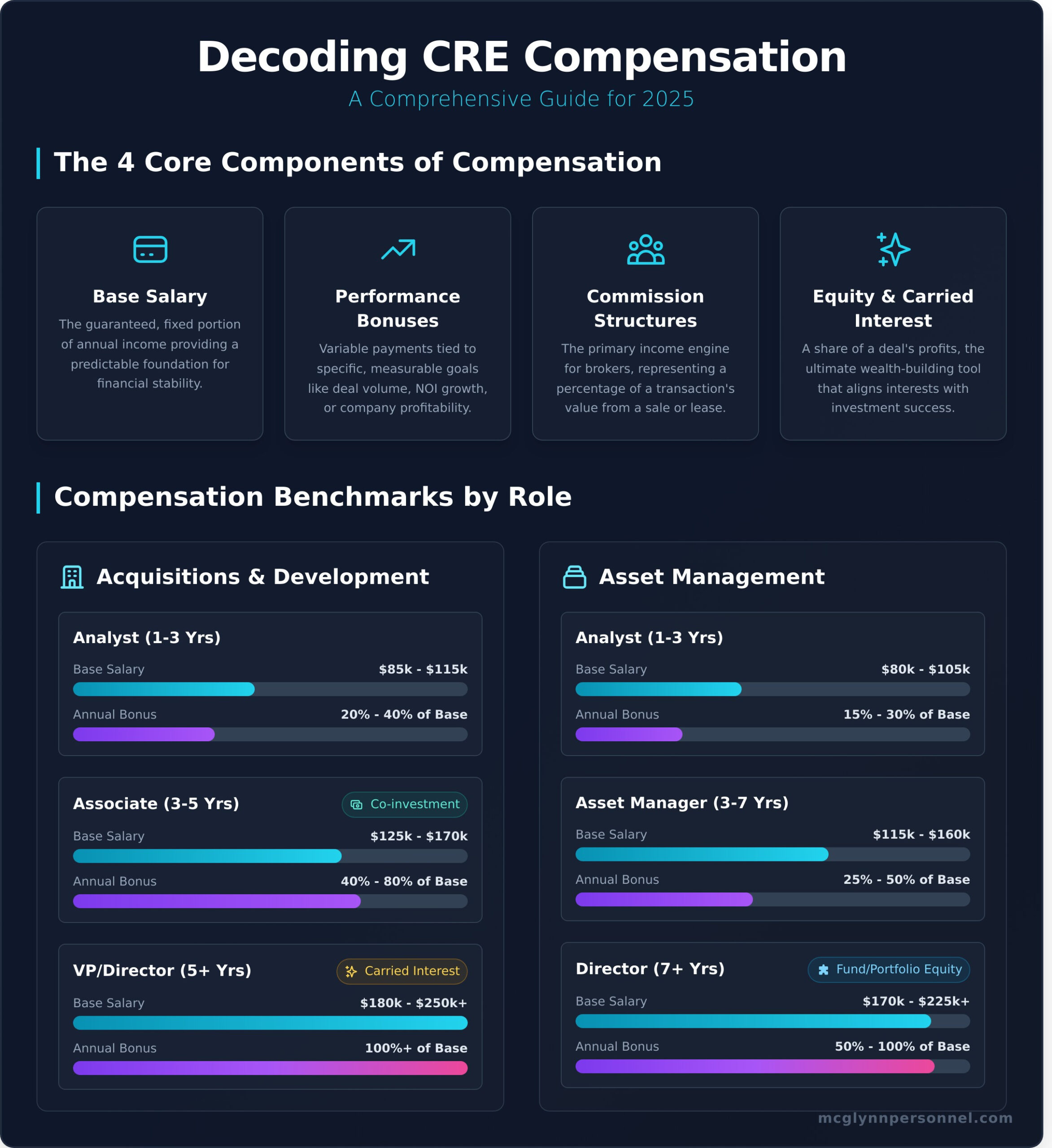
The base salary is the guaranteed, fixed portion of your annual income, providing a predictable foundation. This component is crucial for stability, especially during market downturns or cyclical lulls in deal flow. It is most prominent in roles with longer-term objectives, such as asset management, development, and corporate real estate positions. Factors like years of experience, professional certifications, and the size and type of firm heavily influence this foundational figure.
Performance Bonuses: Rewarding Annual Success
Distinct from commissions, performance bonuses are variable payments typically awarded annually. These bonuses are directly tied to achieving specific, measurable goals. Performance metrics can include:
- Individual deal volume or successful project completions
- Portfolio Net Operating Income (NOI) growth
- Leasing targets and tenant retention rates
- Overall company or fund profitability
This structure incentivizes alignment with the firm’s annual strategic objectives and rewards tangible contributions to its success.
Commission Structures: The Broker’s Engine
For brokers, commission is the primary engine of income. It represents a percentage of the transaction value from a sale or lease. This income is subject to a ‘commission split’ with the brokerage house, which covers overhead and resources. While the foundational principles of real estate agent compensation are well-known, many new brokers begin on a ‘draw vs. commission’ model, receiving a modest stipend that is later paid back from future earnings. This model is the definition of high-risk, high-reward.
Equity and Carried Interest: Building Long-Term Wealth
The ultimate wealth-building tool in commercial real estate is long-term equity, most often in the form of ‘carried interest’ or a ‘promote.’ This is a share of the deal’s profits, paid out after investors have received their initial capital and a preferred return. Common on the principal side for acquisitions and development professionals, this aligns their interests directly with the success of the investment. It is distinct from company stock options and represents a direct stake in the performance of the real estate itself.
CRE Compensation Benchmarks by Role and Experience
To attract and retain premier talent, a precise understanding of current compensation benchmarks is essential. The structure of cre compensation is multifaceted, heavily influenced by role, experience, geographic market, and firm performance. The figures presented below, based on aggregated industry survey data, represent national averages and serve as a reliable baseline for strategic planning. It is critical to note that compensation in primary markets like New York or San Francisco can exceed these benchmarks by 20-30% or more.
Acquisitions and Development Roles
Compensation in these forward-facing roles is directly tied to value creation and deal execution. As professionals advance, a significant portion of their earnings shifts from a guaranteed base salary to performance-based incentives, including equity participation in the assets they source and manage. This structure ensures a strong alignment of interests between the individual and the firm’s stakeholders.
.comp-table { width: 100%; border-collapse: collapse; margin-bottom: 1.5em; }
.comp-table th, .comp-table td { border: 1px solid #ddd; padding: 8px; text-align: left; }
.comp-table th { background-color: #f2f2f2; font-weight: bold; }
| Role | Typical Base Salary | Bonus & Incentive Structure |
|---|---|---|
| Analyst (1-3 Yrs) | $85,000 – $115,000 | 20% – 40% of base salary |
| Associate (3-5 Yrs) | $125,000 – $170,000 | 40% – 80% of base; potential for deal-level co-investment |
| VP/Director (5+ Yrs) | $180,000 – $250,000+ | 100%+ of base; significant carried interest (“promote”) |
Asset Management Roles
In asset management, compensation is structured to reward the consistent, long-term enhancement of portfolio value. While base salaries are competitive, bonuses are meticulously tied to key performance indicators such as Net Operating Income (NOI) growth, successful leasing outcomes, and capital project execution. Senior roles often include equity incentives tied to the overall performance of the fund or portfolio.
| Role | Typical Base Salary | Bonus & Incentive Structure |
|---|---|---|
| Analyst (1-3 Yrs) | $80,000 – $105,000 | 15% – 30% of base, tied to portfolio metrics |
| Asset Manager (3-7 Yrs) | $115,000 – $160,000 | 25% – 50% of base, tied to NOI growth and leasing |
| Director (7+ Yrs) | $170,000 – $225,000+ | 50% – 100% of base; potential for portfolio-level equity |
Commercial Brokerage Roles
Brokerage compensation is fundamentally entrepreneurial and performance-driven. Junior professionals often begin with a modest salary or a draw against future commissions to support them while they build their book of business. For established brokers, earning potential is uncapped and directly reflects their ability to source and close transactions, making it one of the most lucrative paths in the industry.
| Role | Typical Structure | Earning Potential |
|---|---|---|
| Junior Broker/Analyst | $50,000 – $75,000 salary or draw | Modest; focused on learning and supporting senior brokers |
| Mid-Level Broker | Primarily commission-based | $150,000 – $500,000+; highly variable by market and specialty |
| Senior Broker | Purely commission-driven | $500,000 – $2,000,000+; top producers exceed this range |
Key Factors That Influence Your Earning Potential
While your role and title provide a baseline, they are only one part of the complex cre compensation equation. A nuanced understanding of several key factors is essential for professionals aiming to maximize their earnings and for employers calibrating their compensation structures to attract top-tier talent. These variables, spanning from market dynamics to company structure, dictate the true value of a position.
By dissecting these components, candidates can better articulate their value, and hiring managers can structure offers that are both competitive and sustainable for their specific market and business model.
Geographic Market and Location
Compensation benchmarks vary significantly by location. Primary markets like New York City and San Francisco consistently command the highest base salaries, driven by a high cost of living and immense deal volume. However, high-growth secondary and tertiary markets, particularly in the Sun Belt region, are narrowing the gap as capital and talent flow into cities like Austin, Nashville, and Miami. It is important to note that while salaries differ, broker commissions-which are tied to deal size-often exhibit less geographic variance.
Company Type and Size
The structure and scale of your employer directly influence pay. There is often a distinct difference in compensation philosophy between large, institutional organizations and smaller, entrepreneurial firms.
- Institutional Firms (REITs, PE Funds): These companies typically offer higher base salaries and more structured, formulaic bonus programs. Compensation may also be influenced by the firm’s Assets Under Management (AUM), with larger funds often providing more robust pay packages.
- Entrepreneurial Shops (Small Developers): In contrast, smaller firms might provide a more modest base salary but offer significant upside potential through direct equity in projects, profit sharing, or carried interest, aligning employee success directly with deal performance.
Property Type Specialization
Your area of expertise is a powerful lever in determining your value. Professionals specializing in high-demand property sectors consistently earn a premium. While traditional assets like office and retail face evolving challenges, expertise in growth areas is highly sought after. Niche specializations in technical asset classes like life sciences, cold storage, or data centers command a significant premium due to the specialized knowledge required to underwrite, develop, and manage them effectively.
Navigating these variables requires precision and market insight. For expert guidance in aligning your career or your team with the right opportunities, connect with our specialists at McGlynn Personnel.
Strategies for Maximizing Compensation
Achieving optimal compensation is not a zero-sum game; it is the result of a strategic partnership between premier talent and forward-thinking employers. Success in this landscape requires a structured approach from both sides of the negotiating table. By aligning expectations with market realities, both candidates and companies can create agreements that foster long-term growth and mutual success.
For Candidates: How to Negotiate Your Offer
Your career is your most significant asset. To maximize its value, approach negotiations with precision and a clear understanding of your contributions. We recommend a focused, four-part strategy:
- Research and Quantify: Before any discussion, benchmark your target role using reliable industry data. Understand the salary bands, bonus structures, and equity potential for your specific market and asset class.
- Articulate Your Value: Go beyond your resume. Prepare a concise narrative of your accomplishments, supported by metrics like deal volume, assets under management (AUM), or project ROI. Connect your past performance directly to the future needs of the employer.
- Negotiate the Entire Package: Base salary is just one component. Evaluate the offer holistically, considering the annual bonus potential, carried interest, title, professional development opportunities, and benefits.
- Plan for Future Growth: Inquire about the performance review process. Knowing when and how your compensation will be reassessed provides a clear path for future earnings growth.
For Employers: Structuring a Winning Offer
In a competitive market, attracting and retaining top-tier talent requires more than just a competitive salary. A winning offer is a strategic tool for building a high-performance team. To lead the market, focus on clarity, alignment, and long-term incentives. Benchmark your roles against current market data to ensure your offers are compelling. Create transparent and motivating incentive structures, such as performance-based bonuses and commissions tied to clear KPIs. For senior roles, utilize equity or carried interest to align key leaders with the long-term success of the firm. Partner with experts to structure competitive compensation packages.
Future Trends in CRE Compensation
The landscape of cre compensation is evolving. Looking toward 2026, we see three dominant trends. First is the continued shift toward performance-based variable pay, where a larger portion of total earnings is tied directly to measurable results. Second, professionals with advanced technology and data analytics skills will command a premium, as firms increasingly rely on data to drive investment decisions. Finally, a push for greater transparency in compensation reporting is gaining momentum, empowering both candidates and employers to make more informed decisions.
Mastering Your CRE Compensation Strategy for 2025
As we have explored, a comprehensive understanding of commercial real estate compensation is foundational to career advancement. The key takeaways are clear: success hinges on mastering the core components of your pay structure, benchmarking your value against the market, and proactively implementing strategies to enhance your earning potential. True mastery of cre compensation requires not just knowledge, but strategic action and expert navigation of the industry’s complexities.
Navigating this landscape demands a partner with specialized insight. At McGlynn Personnel, we are dedicated to the Real Estate & Property sectors, utilizing a proven process for Executive Search and leadership placements. Our unique combination of global reach and deep local insight into compensation trends ensures our clients and candidates are always positioned for optimal outcomes. We provide the structure and precision needed to achieve profound results.
Take the definitive step toward securing your professional future. Connect with our expert real estate recruiters to navigate your next career move or talent search. Your next career milestone begins here.
Frequently Asked Questions
How much can a first-year analyst expect to make in commercial real estate?
A first-year analyst’s total compensation typically ranges from $75,000 to $110,000. This package is comprised of a base salary, generally between $65,000 and $85,000, and a performance-based bonus. Factors such as geographic market (e.g., New York vs. a secondary market), firm size, and asset class specialization significantly influence these figures. Institutional firms in major markets tend to offer compensation at the higher end of this spectrum to attract top-tier talent for their rigorous analytical roles.
What is a typical commission split for a commercial real estate broker?
Commission splits for commercial real estate brokers vary widely based on experience and the brokerage firm’s structure. A junior broker or new agent might start with a 50/50 split with the house, where the brokerage retains 50% of the gross commission. As a broker builds their book of business and demonstrates consistent results, this split can improve significantly, often to 60/40, 70/30, or even higher for top producers who require less direct support from the firm.
Which commercial real estate job has the highest earning potential?
While many CRE roles offer substantial income, positions with direct performance-based incentives hold the highest earning potential. Top-tier investment sales brokers and principals at development or private equity firms often have uncapped earning capability. A broker’s income is tied directly to the value of deals they close, while developers and fund principals can earn significant wealth through equity and carried interest in successful projects, creating opportunities for multi-million dollar annual compensation packages.
How does a market downturn affect bonuses and commissions in CRE?
Market downturns directly impact variable pay components of cre compensation. For brokers, a reduction in transaction volume and property values leads to lower commission earnings. On the principal side, bonuses for acquisitions and development professionals are often reduced or eliminated as deal flow slows and firms focus on asset management and preserving capital. Firms may also implement stricter performance metrics for bonuses, tying them to portfolio stability and efficiency rather than growth during these periods.
Is it better to work for a large institutional firm or a small private developer for higher pay?
The answer depends on your risk tolerance and career goals. Large institutional firms typically offer higher base salaries, more structured bonuses, and comprehensive benefits, providing predictable year-over-year income. Conversely, a small private developer might offer a lower base salary but provide a direct equity stake in projects. This presents a higher-risk, higher-reward scenario where a successful deal can result in a significantly larger payout than a traditional bonus structure would allow.
What is ‘carried interest’ and how does it work in a real estate deal?
Carried interest, or “promote,” is a share of the profits that the general partner (GP) or sponsor of a real estate investment receives as compensation. This is a performance-based fee earned only after the limited partners (LPs) have received their initial investment back, plus a pre-agreed-upon rate of return known as the “preferred return.” For example, a GP might receive 20% of all profits after investors have achieved an 8% annual return on their capital.