
Imagine slicing your time-to-hire by 30% while finding candidates who stay longer and perform better. That’s the power of end-to-end recruitment reducing time-to-hire in manufacturing, engineering, and property sectors. This guide walks you through the complete recruitment lifecycle, from workforce planning to performance follow-up, showing you how to transform fragmented hiring into a strategic advantage that delivers measurable results.
Table of Contents
- Introduction To End-To-End Recruitment
- Key Components And Workflow Of End-To-End Recruitment
- Benefits And Sector-Specific Impact Of End-To-End Recruitment
- Technology And Tools Enabling An Effective End-To-End Recruitment Process
- Common Misconceptions And Pitfalls In End-To-End Recruitment
- Step-By-Step Framework For Implementing End-To-End Recruitment
- Measuring Recruitment Effectiveness And Continuous Improvement
- Conclusion: Strategic Advantages Of Mastering End-To-End Recruitment
- FAQ
Key takeaways
| Point | Details |
|---|---|
| End-to-end recruitment definition | Covers all phases from workforce planning through onboarding and performance follow-up, tailored for technical roles. |
| Sector-specific benefits | Reduces time-to-hire by 30% and improves retention by 22% in engineering and manufacturing through integrated workflows. |
| Technology’s central role | ATS, AI screening, and CRM systems streamline candidate matching and reduce manual tasks significantly. |
| Common pitfalls to avoid | Inconsistent screening, underusing technology, and rushing hires sacrifice quality and increase turnover. |
| Measurement drives improvement | Track time-to-fill, quality of hire, and hiring manager satisfaction to refine processes continuously. |
Introduction to end-to-end recruitment
End-to-end recruitment encompasses every stage of the hiring process, creating a seamless recruitment process from initial workforce planning through final performance follow-up. For manufacturing, engineering, and property sectors, this integrated approach addresses the unique challenges of filling specialized technical positions while meeting strict compliance requirements. When recruitment operates in silos, you face delays, mismatched candidates, and costly turnover that directly impacts your bottom line.
Fragmented recruitment creates gaps where candidates fall through or quality suffers. One department handles sourcing while another manages interviews, leading to miscommunication and inconsistent evaluation standards. This disconnection becomes especially problematic when hiring for precision engineering roles or property management positions that demand specific certifications and technical competencies.
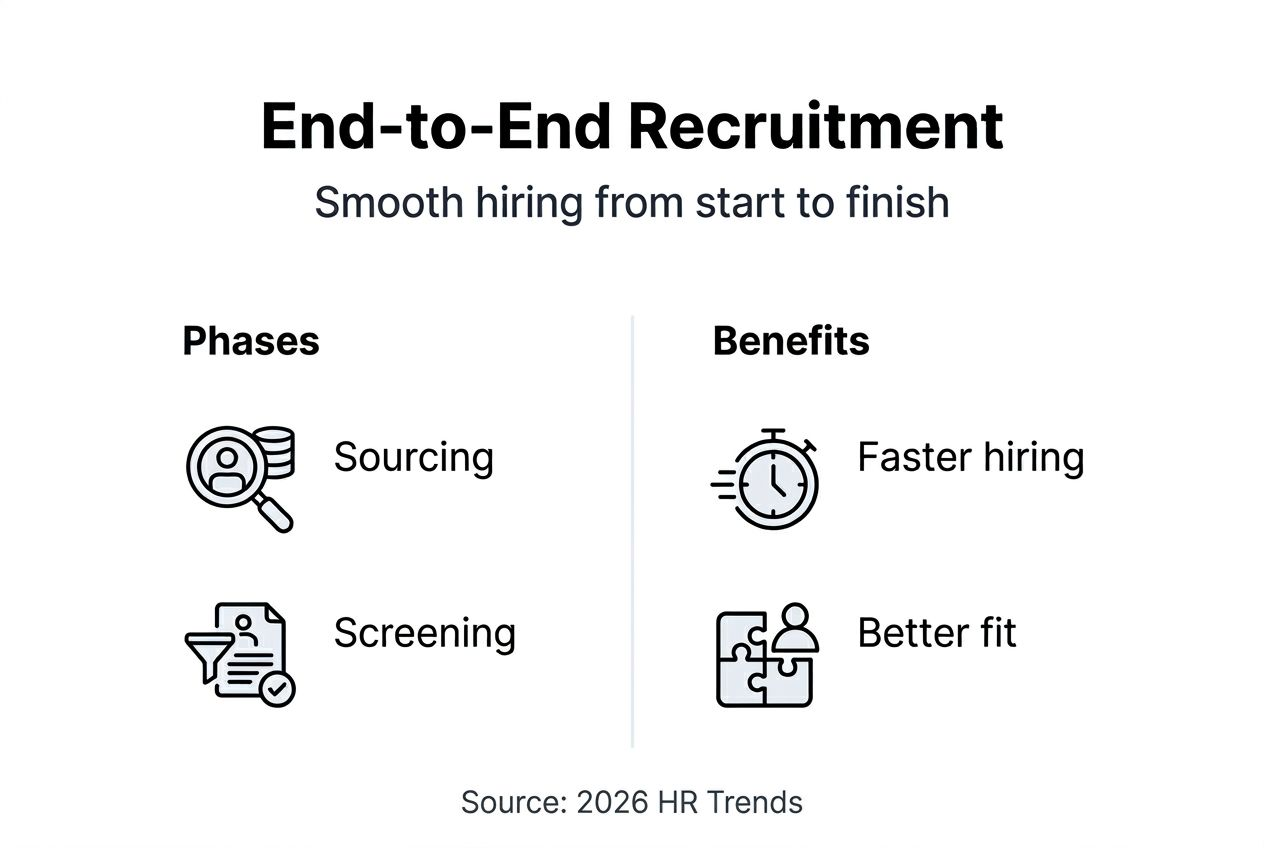
The phases of end-to-end recruitment include:
- Workforce planning aligned with organizational goals
- Job profiling with detailed technical requirements
- Multi-channel sourcing targeting specialized talent pools
- Structured screening using sector-specific assessments
- Coordinated interviewing with technical evaluations
- Offer negotiation reflecting market rates
- Comprehensive onboarding with role-specific training
- Performance follow-up to measure hiring success
Each phase builds on the previous one, creating a cohesive system that reduces redundancy and accelerates hiring. You maintain control over quality while adapting to the specific demands of technical roles in your industry.
Key components and workflow of end-to-end recruitment
A stepwise recruitment framework integrates technology and human expertise across eight distinct phases. This integration transforms isolated hiring activities into a coordinated workflow that serves manufacturing, engineering, and property sectors effectively.
- Workforce planning analyzes current and future staffing needs based on organizational growth projections and turnover patterns.
- Job profiling defines technical competencies, certifications, and behavioral traits required for success in specialized roles.
- Sourcing leverages multiple channels including industry job boards, professional networks, and recruitment partnerships to reach qualified candidates.
- Screening applies automated resume filtering combined with custom assessments that evaluate technical skills and cultural fit.
- Interviewing coordinates stakeholders through structured panels that assess both technical capabilities and soft skills consistently.
- Offer negotiation balances competitive compensation with candidate expectations while maintaining budget constraints.
- Onboarding accelerates productivity through role-specific training, equipment setup, and clear performance expectations.
- Performance follow-up tracks new hire success rates and gathers feedback to refine future recruitment cycles.
Technology plays a critical role in connecting these phases. Applicant Tracking Systems centralize candidate data, allowing recruiters and hiring managers to collaborate in real time. AI-powered screening tools analyze resumes against job requirements, ranking candidates based on qualification match and experience relevance. This automation reduces the manual burden on your HR team while improving accuracy in identifying top talent.
Integration with organizational hiring goals ensures every recruitment decision supports broader business objectives. When your manufacturing plant needs to scale production, the workforce planning phase forecasts hiring timelines and skill requirements months in advance. Property management firms benefit from compliance checks built directly into screening workflows, catching licensing gaps before candidates reach the interview stage.
Stakeholder coordination becomes seamless when all parties access the same candidate information and evaluation criteria. Hiring managers provide input on technical assessments while HR manages timeline adherence and candidate communication. This collaboration reduces time-to-hire while maintaining rigorous quality standards across every position.
Benefits and sector-specific impact of end-to-end recruitment
Manufacturing, engineering, and property sectors face distinct hiring challenges that integrated recruitment directly addresses. End-to-end recruitment reduces time-to-hire by 30% while improving candidate retention by 22% in engineering roles, delivering measurable ROI that justifies process investment.
Time-to-hire drops significantly when you eliminate handoff delays between recruitment phases. Automated screening moves qualified candidates to interviews faster while integrated scheduling reduces the back-and-forth that extends hiring timelines. For manufacturing roles with seasonal demand spikes, this speed advantage means production lines stay staffed without overtime costs ballooning.

Candidate fit improves through tailored recruitment for manufacturing roles that use industry-specific assessments. Instead of generic interviews, you test precision engineering candidates on CAD software proficiency or evaluate property managers on lease negotiation scenarios. These targeted evaluations predict job performance more accurately than traditional resume screening alone.
Retention rates climb when comprehensive onboarding sets clear expectations and provides necessary training from day one. New hires in technical roles need equipment access, safety certifications, and mentorship to succeed. When onboarding integrates with the broader recruitment process, you track these elements systematically rather than leaving them to chance.
Sector-specific challenges find solutions through specialized recruitment tailored approach methods:
- Technical skill shortages in precision engineering get addressed through expanded sourcing in niche professional networks
- Compliance requirements for property management become automated checks within screening workflows
- Candidate quality concerns in manufacturing resolve through structured assessments that measure hands-on capabilities
- Geographic limitations for specialized roles expand via remote work options and relocation support
Balancing tradition and innovation becomes easier when your entire recruitment process adapts to changing market conditions. Data from each hiring cycle informs improvements to sourcing strategies, assessment tools, and onboarding programs. You build institutional knowledge that compounds over time, making each subsequent hire stronger than the last.
Technology and tools enabling an effective end-to-end recruitment process
Modern technology in recruitment transforms how you source, screen, and hire specialized talent. Applicant Tracking Systems serve as your recruitment command center, storing candidate profiles, tracking application progress, and generating analytics that reveal bottlenecks in your hiring pipeline. Candidate Relationship Management platforms maintain ongoing communication with prospects, nurturing talent pools for future openings.
AI screening tools analyze thousands of resumes in minutes, identifying candidates whose experience matches your technical requirements. For engineering positions requiring specific software certifications, AI flags qualified applicants automatically while filtering out unqualified ones. This precision saves your recruiters hours of manual review while reducing bias in initial screening stages.
Emerging technologies in talent sourcing include predictive analytics that forecast which candidates will accept offers based on historical data patterns. Chatbots handle initial candidate questions about benefits and work schedules, providing instant responses that keep prospects engaged. Video interviewing platforms let hiring managers evaluate technical skills remotely, expanding your candidate pool beyond local geography.
Integrated platforms connect every stakeholder in your hiring process. When a hiring manager approves a candidate for the next interview round, the system automatically notifies recruiters and triggers scheduling workflows. The recruiter’s handbook principles get embedded in evaluation templates, ensuring consistent assessment criteria across all interviewers.
Key technology impacts include:
- Resume screening time drops from hours to minutes through automated keyword matching and skill extraction
- Candidate matching accuracy improves as machine learning identifies success patterns from historical hires
- Communication delays disappear when automated emails update candidates on application status immediately
- Data-driven decisions replace gut feelings as analytics reveal which sourcing channels deliver the best candidates
Pro Tip: Review your technology stack quarterly to ensure it addresses current recruitment challenges and candidate expectations. Technology impact on recruitment efficiency accelerates when you adopt tools that integrate with existing systems rather than creating new data silos.
Common misconceptions and pitfalls in end-to-end recruitment
Many HR professionals believe end-to-end recruitment means outsourcing their entire hiring function to an external agency. In reality, it’s about creating an integrated internal process where every phase connects seamlessly. You maintain control over hiring decisions while eliminating the gaps that cause delays and quality issues.
Another misconception frames comprehensive recruitment as prohibitively expensive. Initial technology investments and process design require resources, but the long-term savings from reduced turnover and faster hiring deliver positive ROI within months. When manufacturing roles stay vacant for weeks, production delays cost far more than recruitment system upgrades.
Frequent failure points undermine even well-intentioned recruitment efforts:
- Inconsistent screening criteria let unqualified candidates through to interviews, wasting hiring manager time and damaging your employer brand
- Underutilized technology means you’ve paid for ATS features that sit unused while recruiters manually track candidates in spreadsheets
- Rushed hiring decisions sacrifice thorough evaluation for speed, leading to poor fits who leave within months
- Missing stakeholder alignment creates confusion about role requirements and evaluation standards
Standardized screening through your seamless recruitment process prevents these problems. When every candidate answers the same technical questions and completes identical assessments, you compare qualifications objectively. Hiring managers and recruiters align on must-have versus nice-to-have skills before posting positions, eliminating disagreements during candidate review.
Quality suffers when speed becomes your only metric. Yes, fast hiring matters for time-sensitive roles. But rushing technical evaluations for engineering positions or skipping reference checks for property managers creates bigger problems down the line. New hires who lack necessary skills require extensive training or ultimately leave, restarting your recruitment cycle.
Pro Tip: Balance process speed with thorough evaluation by front-loading your candidate pipeline. Start sourcing before positions become urgent, building a pool of pre-screened prospects who can move quickly through final interviews when needs arise. This approach maintains quality standards while reducing time-to-hire when positions open.
Step-by-step framework for implementing end-to-end recruitment
Implementing comprehensive recruitment frameworks requires systematic planning tailored to manufacturing, engineering, and property sectors. This eight-phase model provides the structure you need for practical deployment.
- Workforce planning starts with analyzing turnover trends, growth projections, and skill gaps to forecast hiring needs three to six months ahead.
- Job profiling documents technical requirements, necessary certifications, and success metrics for each role you’re filling.
- Sourcing activates multiple channels simultaneously, posting to industry job boards while reaching out to passive candidates through professional networks.
- Screening applies automated resume filtering followed by skills assessments that evaluate role-specific technical competencies.
- Interviewing coordinates panel schedules, provides structured question sets, and captures evaluations in your ATS for easy comparison.
- Offer negotiation researches market compensation rates and structures offers that attract top candidates while respecting budget constraints.
- Onboarding schedules training, assigns mentors, and sets 30-60-90 day performance milestones that clarify expectations.
- Performance follow-up tracks new hire success rates and gathers feedback from hiring managers to refine future recruitment cycles.
| Phase | Objective | Key Activities |
|---|---|---|
| Workforce Planning | Forecast staffing needs | Analyze turnover, review growth plans, identify skill gaps |
| Job Profiling | Define role requirements | Document technical skills, certifications, success metrics |
| Sourcing | Build candidate pipeline | Post to job boards, engage passive candidates, leverage referrals |
| Screening | Evaluate qualifications | Filter resumes, administer assessments, verify credentials |
| Interviewing | Assess fit and skills | Coordinate panels, conduct technical evaluations, document feedback |
| Offer Negotiation | Secure acceptance | Research compensation, structure offers, address candidate concerns |
| Onboarding | Accelerate productivity | Schedule training, assign mentors, set performance milestones |
| Performance Follow-up | Measure success | Track retention, gather feedback, identify process improvements |
For technical competencies in manufacturing, customize screening assessments to test hands-on equipment operation or safety protocol knowledge. Engineering roles benefit from coding challenges or design problem scenarios that reveal practical capabilities beyond resume claims. Property management positions require regulatory knowledge checks and customer service simulations that predict tenant interaction success.
Feedback loops after performance follow-up drive continuous improvement. When new hires struggle with specific job aspects, trace those challenges back to gaps in your screening or interviewing phases. Perhaps your technical assessment missed a critical skill, or interview questions failed to probe deeply enough into relevant experience. Adjust those elements for future recruitment cycles, building institutional knowledge that strengthens every subsequent hire.
Workforce planning alignment ensures recruitment supports broader business objectives. When your manufacturing facility plans a production line expansion in six months, start sourcing machine operators and quality control technicians immediately. This proactive approach builds candidate pipelines before urgent needs arise, giving you time for thorough evaluation without sacrificing speed.
Measuring recruitment effectiveness and continuous improvement
Tracking effective recruitment metrics reveals where your process excels and where it needs adjustment. Time-to-fill measures calendar days from job posting to accepted offer, highlighting delays in specific phases. Quality of hire assesses new employee performance ratings, retention beyond one year, and hiring manager satisfaction scores.
Candidate drop-off rate calculates the percentage of qualified applicants who withdraw at each recruitment stage. High drop-off during screening suggests your application process is too cumbersome. Losses between offer and start date indicate compensation misalignment or competing opportunities. Each metric points to specific process improvements.
Hiring manager satisfaction captures whether new hires meet expectations for technical skills, cultural fit, and productivity ramp-up speed. Survey hiring managers 90 days after each new hire starts, asking structured questions about performance against role requirements. Low satisfaction scores trigger deeper analysis into your screening and interviewing criteria.
Data collection happens automatically when you use integrated recruitment technology. Your ATS tracks application-to-interview ratios, interview-to-offer conversion rates, and offer acceptance percentages. Export this data monthly to identify trends and spot emerging problems before they impact multiple hires.
Feedback loops with hiring managers and candidates provide qualitative insights that numbers alone miss:
- Ask rejected candidates why they declined offers to understand compensation gaps or onboarding concerns
- Survey new hires about their recruitment experience to identify communication delays or unclear expectations
- Meet with hiring managers quarterly to review which sourcing channels deliver the strongest candidates
- Gather exit interview data from departures within the first year to trace problems back to recruitment phase failures
| KPI | Definition | Improvement Action |
|---|---|---|
| Time-to-fill | Days from posting to accepted offer | Automate screening, expand sourcing channels |
| Quality of hire | Performance ratings plus retention rate | Refine assessments, improve interviewing training |
| Candidate drop-off rate | Percentage withdrawing at each stage | Simplify application, improve communication |
| Hiring manager satisfaction | Survey scores on new hire performance | Align screening criteria, set clearer expectations |
| Offer acceptance rate | Percentage of offers accepted | Research market rates, enhance employer brand |
Continuous improvement aligns recruitment refinements with organizational hiring goals. When quality of hire scores drop in engineering positions, investigate whether recent changes to screening assessments adequately evaluate technical skills. If time-to-fill extends beyond targets for property management roles, analyze whether limited sourcing channels restrict your candidate pool.
Analytics identify bottlenecks that manual tracking misses. Perhaps 60% of candidates withdraw after initial phone screens, suggesting your recruiters need better role-selling techniques. Or maybe interview-to-offer conversion rates drop below industry benchmarks, indicating your evaluation criteria are too rigid or interviewers lack consistency. Address these specific issues rather than overhauling your entire process.
Conclusion: strategic advantages of mastering end-to-end recruitment
Mastering end-to-end recruitment transforms hiring from a reactive scramble into a strategic advantage. You reduce time-to-hire while improving candidate quality and retention through integrated workflows that connect every recruitment phase. Technology automates time-consuming tasks while providing data that informs continuous improvement.
For manufacturing, engineering, and property sectors, tailored frameworks address unique technical requirements and compliance needs. Standardized screening ensures consistent evaluation. Comprehensive onboarding accelerates new hire productivity. Performance tracking reveals which recruitment decisions deliver the strongest long-term results.
The organizational impact extends beyond individual hires. Strategic recruitment mastery builds talent pipelines that support growth initiatives, reduces costs associated with turnover and lengthy vacancies, and strengthens your employer brand through positive candidate experiences. Each successful hire compounds these benefits, creating competitive advantages that rivals struggle to match.
Boost your recruitment with McGlynn Personnel
Ready to transform your recruitment process? McGlynn Personnel specializes in flexible staffing solutions designed specifically for manufacturing, engineering, and property sectors. Our tailored recruitment for specialized sectors approach combines industry expertise with proven end-to-end methodologies that reduce your time-to-hire while improving candidate fit.
We handle the complexities of technical screening, compliance verification, and candidate sourcing so your HR team can focus on strategic hiring decisions. Working with a recruitment agency that understands your sector’s unique demands means access to pre-screened talent pools and recruitment workflows optimized for technical roles. Contact McGlynn Personnel today to streamline your hiring process and secure the specialized talent your organization needs to thrive.
FAQ
What industries benefit most from end-to-end recruitment?
Manufacturing, engineering, and property sectors gain the most value because these industries require specialized technical skills and compliance verification. Role complexity demands thorough screening and assessment processes that integrated recruitment delivers efficiently. Organizations filling precision engineering positions or property management roles see measurable improvements in candidate quality and retention.
How does technology improve candidate screening in these sectors?
Technology automates resume filtering based on technical certifications and experience requirements specific to manufacturing and engineering roles. AI-powered tools rank candidates by qualification match, letting recruiters focus on top prospects. Custom assessments integrated into screening workflows evaluate hands-on skills and regulatory knowledge that predict job performance in property and technical positions.
What are some common mistakes to avoid in end-to-end recruitment?
Avoid applying inconsistent screening criteria that let unqualified candidates reach interviews. Don’t neglect stakeholder input when defining role requirements and evaluation standards. Never sacrifice thorough technical evaluation for speed, as rushed hiring decisions lead to poor fits and costly turnover. Missing feedback loops prevent process improvements that compound recruitment effectiveness over time.
How can HR professionals measure recruitment success effectively?
Track time-to-fill, quality of hire, candidate drop-off rates, and hiring manager satisfaction scores consistently. Quality of hire combines new employee performance ratings with retention beyond one year. Analyze which sourcing channels deliver the strongest candidates and where qualified applicants withdraw from your process. Use this data to refine screening criteria, improve interviewing techniques, and optimize compensation offers.
Recommended
- Creating a Seamless Recruitment Process: A Comprehensive Guide for Success – Mcglynn Personnel
- Navigating Recruitment: Strategic Approaches for APAC and GULF Markets – Mcglynn Personnel
- Navigating Recruitment in Emerging Markets: Strategies for Success – Mcglynn Personnel
- Ultimate Guide to Working with a Recruiter – Mcglynn Personnel