
Hiring the right talent in manufacturing, engineering, and real estate remains one of the most critical yet challenging responsibilities for HR professionals. Poor screening practices lead to costly mismatches, extended training periods, and turnover rates that disrupt operations and drain budgets. When you fail to identify the right candidates early, your organization faces productivity losses, safety risks, and the expense of restarting the recruitment process. This guide delivers actionable strategies to refine your candidate screening process, covering preparation essentials, execution methods, and verification techniques tailored specifically for these specialized sectors.
Table of Contents
- Understanding The Challenges Of Screening Candidates In Manufacturing, Engineering, And Real Estate
- Preparing Your Candidate Screening Process: Tools, Criteria, And Prerequisites
- Executing Candidate Screening: Step-By-Step Methods And Best Practices
- Verifying Candidate Fit: Assessment, Reference Checks, And Common Pitfalls To Avoid
- How McGlynn Personnel Supports Your Candidate Screening And Recruitment Success
- Frequently Asked Questions
Key takeaways
| Point | Details |
|---|---|
| Strategic screening reduces costs | Effective candidate screening lowers recruitment expenses and minimizes turnover in specialized sectors. |
| Skills assessments improve outcomes | Combining technical evaluations with soft skill testing enhances hiring accuracy and candidate job fit. |
| AI tools boost efficiency | Leveraging AI driven pre-screening and structured methods increases speed without sacrificing quality. |
| Industry tailored approaches matter | Customizing screening criteria to manufacturing, engineering, and real estate needs delivers better results. |
Understanding the challenges of screening candidates in manufacturing, engineering, and real estate
Manufacturing faces an unprecedented talent crisis. The sector needs to fill 3.8 million jobs through 2033, yet half will likely remain unfilled due to skills gaps and demographic shifts. This shortage creates intense pressure on HR teams to screen candidates more effectively while competing for limited talent pools.
High turnover compounds these challenges. 81% of manufacturers report turnover disrupting operations, forcing teams to constantly refill positions rather than building stable workforces. Each departure costs thousands in lost productivity, training investments, and institutional knowledge. When screening processes fail to identify candidates who will thrive long term, this cycle perpetuates.
Traditional hiring methods often create a mismatch between resumes and actual capabilities, extending ramp-up times and reducing efficiency. Candidates may present impressive credentials yet lack the practical skills to perform effectively on day one. This gap becomes particularly costly in technical roles where safety and precision matter.
Real estate sectors face distinct challenges requiring focus on communication, negotiation, and client relationship skills alongside technical knowledge. Unlike manufacturing’s emphasis on hard skills, property management and development roles demand sophisticated interpersonal abilities that traditional screening overlooks.
Consider these specific screening obstacles:
- Validating technical competencies beyond resume claims
- Assessing digital literacy as automation transforms workflows
- Evaluating soft skills critical for team collaboration and client interaction
- Identifying candidates who align with safety cultures and operational standards
- Distinguishing between theoretical knowledge and hands-on experience
“The right candidate impacts not just productivity but workplace safety, team morale, and your organization’s ability to meet customer commitments on time and within budget.”
Addressing these challenges requires moving beyond gut feelings and generic interviews toward structured, evidence based screening that reveals true candidate potential. Understanding common hiring mistakes in manufacturing helps you avoid repeating costly errors.
Preparing your candidate screening process: tools, criteria, and prerequisites
Successful screening begins long before you review the first resume. You need clear criteria, appropriate tools, and well defined role requirements that align with your sector’s unique demands.
Start by identifying must-have skills for each position. Digital, soft, and technical skills grow fastest in manufacturing, requiring updated screening criteria that reflect current industry needs. Technical roles demand specific certifications, hands-on experience with equipment or software, and demonstrated problem solving abilities. Real estate positions prioritize communication excellence, negotiation skills, and market knowledge.
Develop a prioritized screening framework:
- Essential qualifications: non-negotiable requirements like licenses, certifications, or minimum experience levels
- Core competencies: technical and digital skills directly tied to job performance
- Behavioral attributes: soft skills including teamwork, adaptability, and communication
- Cultural alignment: values and work styles that fit your organizational environment
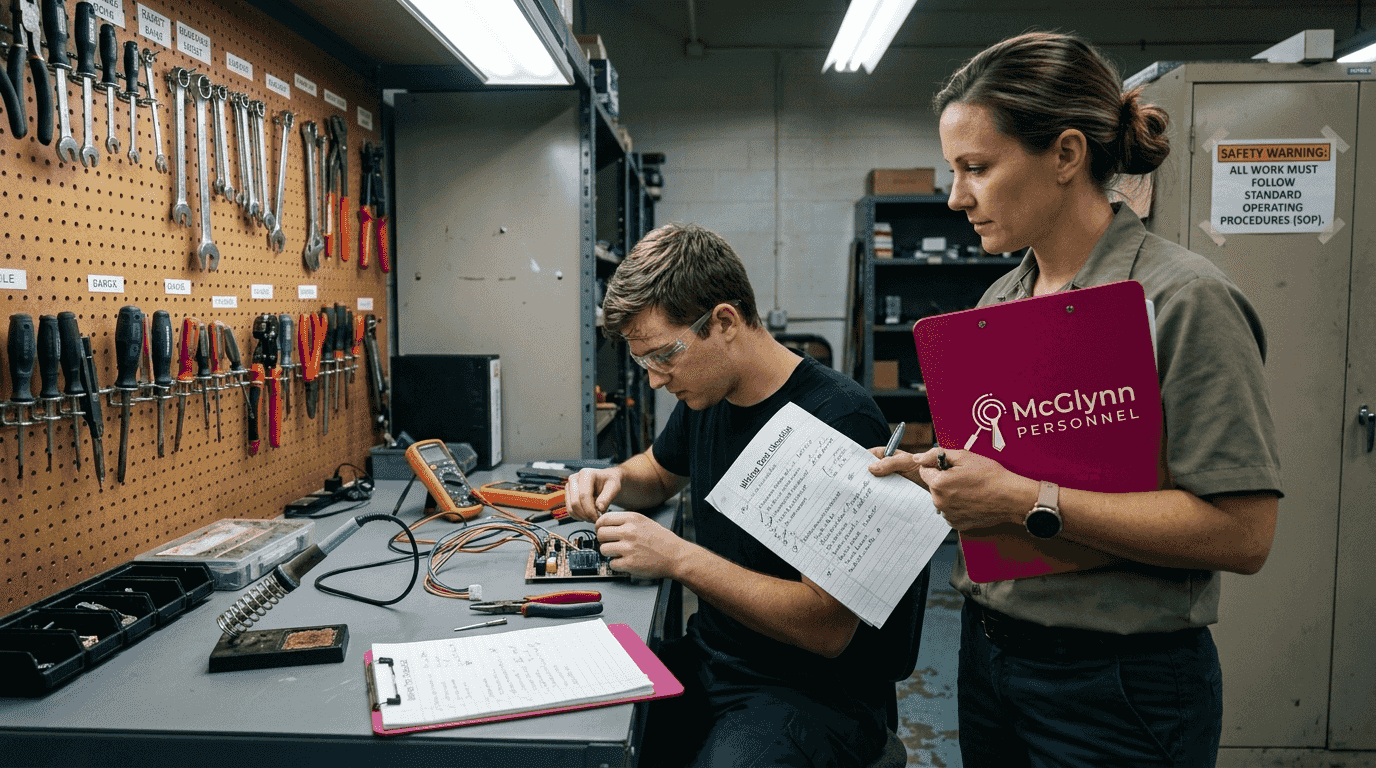
Select screening tools matched to what you’re evaluating. Skills assessments validate technical capabilities through practical tests rather than self-reported proficiency. AI powered pre-screening handles high volume resume filtering, identifying qualified candidates faster while reducing unconscious bias. Structured interview guides ensure consistent evaluation across all candidates.
| Screening Element | Tool Options | Best For |
|---|---|---|
| Resume filtering | AI screening platforms | High volume roles, initial qualification checks |
| Technical skills | Practical assessments, simulations | Manufacturing, engineering positions |
| Soft skills | Behavioral interviews, role plays | Real estate, management roles |
| Cultural fit | Structured interviews, team interactions | All positions requiring collaboration |
Understand legal and ethical boundaries in your screening process. Ensure assessments relate directly to job requirements and apply consistently across all candidates. Avoid questions or criteria that could introduce discrimination based on protected characteristics. Document your screening rationale to demonstrate fair, job-related decision making.
Establish clear prerequisites before screening begins. Define minimum education levels, required certifications, and experience thresholds that candidates must meet. This prevents wasting time on unqualified applicants while ensuring you focus energy on viable prospects.
Pro Tip: Create role-specific screening scorecards that weight criteria by importance. This transforms subjective impressions into objective, comparable data that improves hiring decisions and reduces bias.
Skills based hiring improves quality while reducing time-to-productivity. Rather than relying heavily on credentials or years of experience, focus screening on demonstrable abilities that predict job success. This approach often reveals strong candidates overlooked by traditional methods. Effective manufacturing recruitment strategies incorporate these evidence based techniques to accelerate hiring without sacrificing quality.
Executing candidate screening: step-by-step methods and best practices
With preparation complete, execute your screening process systematically to identify top candidates efficiently and accurately.
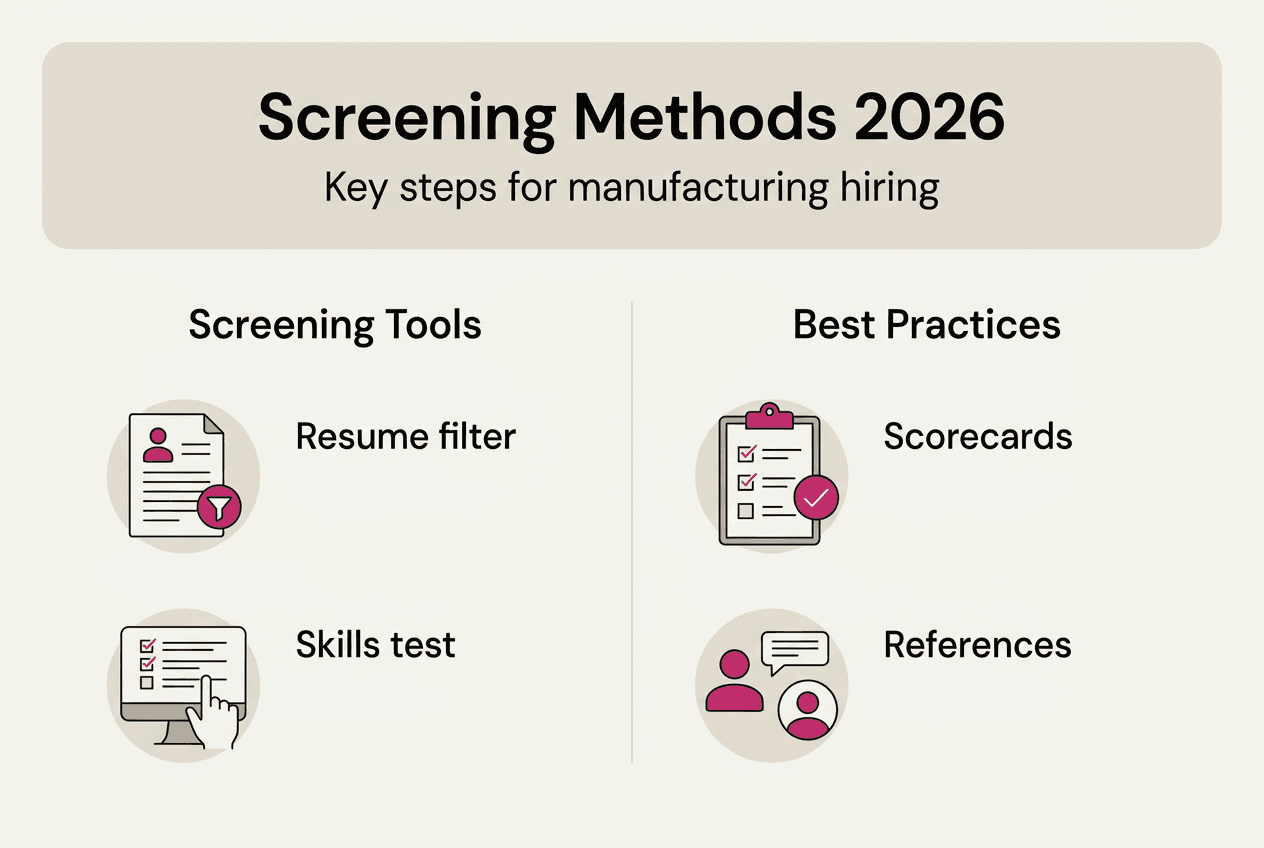
Begin with resume screening to filter basic qualifications. AI pre-screening reduces costs by 25% while processing applications faster than manual review. These tools identify keyword matches, required certifications, and experience levels, creating a qualified candidate pool for deeper evaluation. However, supplement AI with human judgment to catch nuanced qualifications algorithms might miss.
Implement skills assessments to validate technical and digital competencies:
- Design tests that mirror actual job tasks rather than theoretical knowledge
- Use timed practical exercises for manufacturing and engineering roles
- Evaluate digital literacy through software simulations relevant to the position
- Score assessments using predetermined rubrics for consistency
- Provide clear instructions and reasonable time limits
- Review results alongside other screening data rather than as sole determinants
Skills-based hiring improves candidate-job matching and accelerates hiring by focusing on abilities that directly predict performance. This method reduces reliance on pedigree while expanding your talent pool to include non-traditional candidates with proven skills.
Evaluate soft skills critical in real estate and collaborative manufacturing environments through behavioral interviews and simulations. Ask candidates to describe specific situations demonstrating communication, problem solving, or conflict resolution. Listen for concrete examples with clear outcomes rather than vague generalities. Role-play scenarios reveal how candidates handle client interactions, team disagreements, or pressure situations.
| Screening Method | Advantages | Limitations |
|---|---|---|
| AI resume screening | Fast, handles high volume, reduces initial bias | May miss nuanced qualifications, requires human oversight |
| Skills assessments | Validates actual abilities, predicts job performance | Time intensive to create, may stress candidates |
| Behavioral interviews | Reveals soft skills, cultural fit indicators | Subjective without structure, prone to bias |
| Simulations | Tests real-world problem solving, engaging for candidates | Resource intensive, difficult to standardize scoring |
Use structured interview techniques to reduce bias and improve comparability across candidates. Develop standardized questions for each role, ask all candidates the same core questions, and use consistent scoring criteria. This approach transforms interviews from casual conversations into reliable assessment tools.
Pro Tip: Record interview notes immediately after each conversation using your scoring rubric. Waiting even a few hours allows memory to fade and biases to creep in, reducing the accuracy of your evaluations.
Maintain clear documentation throughout screening for compliance and future reference. Record which assessments each candidate completed, their scores, interview feedback, and advancement decisions. This paper trail protects against discrimination claims while helping you refine screening processes based on which methods best predict successful hires.
Leverage AI recruitment tools strategically to enhance rather than replace human judgment. Technology excels at processing large datasets and identifying patterns, while humans bring contextual understanding and nuanced evaluation. Combining both creates screening processes that are efficient and insightful.
Verifying candidate fit: assessment, reference checks, and common pitfalls to avoid
Screening identifies promising candidates, but verification confirms they’ll actually succeed in your environment before you extend offers.
Conduct thorough reference and background checks to validate information candidates provided. Contact former supervisors rather than just HR departments to gain insights into work quality, reliability, and interpersonal skills. Ask specific questions about the candidate’s performance in areas critical to your role. Verify employment dates, titles, and responsibilities match resume claims.
Use post-screening assessments to confirm capabilities versus resume representations. The mismatch between resumes and abilities causes inefficiencies and extended training periods that undermine hiring ROI. Final stage practical tests or work samples reveal whether candidates can perform under realistic conditions. For technical roles, consider paid trial projects that demonstrate skills while giving candidates a genuine preview of the work.
Avoid common verification pitfalls:
- Overrelying on interview performance without validating claims through references or assessments
- Ignoring soft skills because they’re harder to measure than technical abilities
- Skipping background checks to save time or money, only to discover issues after hiring
- Failing to verify certifications and licenses that candidates list
- Accepting vague or overly positive references without probing for specifics
Maintain transparency and ethical standards throughout verification. Inform candidates about background checks and obtain necessary permissions. Use only job-relevant information in hiring decisions. Provide feedback to candidates who aren’t selected, offering constructive insights when possible. This professionalism protects your employer brand and maintains positive candidate experiences even for those you don’t hire.
Keep communication clear with candidates about assessment processes and timelines. Explain what verification steps remain, when they’ll hear decisions, and what information you need from them. This reduces candidate anxiety and keeps top prospects engaged rather than accepting competing offers during prolonged silence.
Pro Tip: Create a verification checklist for each role tier ensuring consistent, thorough validation across all finalist candidates. This prevents shortcuts that lead to bad hires while demonstrating due diligence.
Establish continuous feedback loops between hiring managers, HR teams, and new hires to refine screening quality. Track which screening methods best predicted successful performance after 90 days and one year. Identify where mismatches occurred and adjust criteria or tools accordingly. This data-driven improvement transforms screening from static process to evolving competitive advantage.
Recognize patterns in screening mistakes by reviewing cases where hires didn’t work out. Common hiring mistakes often trace back to verification gaps, rushed processes, or overweighting certain factors while ignoring others. Learning from these experiences strengthens future screening while reducing costly turnover.
How McGlynn Personnel supports your candidate screening and recruitment success
Effective screening requires expertise, time, and resources that many organizations struggle to maintain alongside operational demands. Partnering with specialized recruitment agencies delivers immediate access to proven screening methodologies and industry-specific talent networks.
McGlynn Personnel offers tailored recruitment expertise for manufacturing, engineering, and real estate sectors, understanding the unique screening challenges each industry faces. Their rigorous candidate evaluation processes combine skills assessments, behavioral interviews, and thorough verification to present only qualified, vetted candidates who match your specific requirements.
Their services simplify complex screening tasks while accelerating time-to-hire. Whether you need permanent placements or flexible staffing solutions for project-based work, specialized agencies handle sourcing, screening, and preliminary evaluation. This frees your team to focus on final interviews and cultural fit assessment for top candidates.
Explore comprehensive manufacturing recruitment strategies or learn how real estate contract recruitment can support growth initiatives while maintaining quality standards.
Frequently asked questions
How do I define effective screening criteria for technical roles?
Identify must-have technical skills, certifications, and hands-on experience levels that directly impact job performance. Incorporate both hard skills specific to equipment or processes and industry standards like safety certifications. Prioritize criteria by importance, distinguishing between essential qualifications and preferred attributes.
What are the best tools for pre-screening candidates in manufacturing?
AI-driven resume screening platforms, practical skills assessments, and structured interview guides lead effective pre-screening. Select tools measuring hands-on abilities and safety awareness rather than just theoretical knowledge. Combine automated filtering with human evaluation for optimal results.
How can I evaluate soft skills during screening effectively?
Use behavioral interview questions asking candidates to describe specific past situations demonstrating communication, problem solving, or teamwork. Include role-play simulations or situational judgment tests focused on interpersonal challenges. In real estate, focus on communication and negotiation for success. Score responses using predetermined rubrics to maintain consistency.
What are common pitfalls to avoid in candidate screening?
Avoid unconscious bias by using structured interviews and objective assessments applied consistently. Don’t equate polished resumes with actual skills or assume interview performance predicts job success alone. Ensure thorough verification of claims and maintain ongoing communication with candidates. Balance efficiency with thoroughness rather than rushing decisions.
How long should the candidate screening process take?
Screening timelines vary by role complexity and candidate volume, but aim for two to three weeks from application to offer for most positions. Longer processes risk losing top candidates to competitors. Streamline by running background checks and reference calls concurrently rather than sequentially. Communicate clear timelines to candidates to maintain engagement.
Should I use the same screening process for all roles?
No, tailor screening intensity and methods to role requirements and seniority levels. Entry-level positions may need basic skills validation and cultural fit assessment, while senior roles require extensive technical evaluation, leadership assessment, and thorough reference checks. Customize your approach while maintaining consistent fairness and legal compliance across all hiring.
Recommended
- Avoiding Common Hiring Mistakes in Manufacturing: A 2026 Precision Guide – Mcglynn Personnel
- The Complete Guide to Manufacturing Recruitment: Strategies & Best Practices – Mcglynn Personnel
- Industrial Manufacturing Headhunters: A 2026 Guide to Finding Precision Talent – Mcglynn Personnel
- Executive Search for Manufacturing Roles: The Definitive Guide – Mcglynn Personnel
- Industrial Trade Show Lead Systems
- Video interview practice boosts hiring chances by 25% in 2026 | Pavone Academy