
Many real estate and property firms still treat recruitment as a back-office HR task, something to handle when a position opens up. This mindset costs businesses dearly in turnover, missed opportunities, and mismatched hires. In reality, recruitment is a core business operation that directly determines team quality and organizational success. Effective recruiters don’t just fill seats; they build strategic talent pipelines aligned with business goals, reduce costly turnover, and position companies as employers of choice. This article explores how recruiters drive successful hiring in property sectors and what makes their role indispensable in 2026.
Table of Contents
- Why Recruitment Is A Core Strategic Operation In Property Sectors
- Defining Specific Roles For Targeted Recruitment Success
- Aligning Recruitment Planning With Real Estate Business Goals
- Attracting And Engaging Top Talent: Employer Branding And Strategic Outreach
- Explore Flexible Recruitment Solutions With McGlynn Personnel
Key takeaways
| Point | Details |
|---|---|
| Strategic role definition | Clear job descriptions improve candidate screening and reduce turnover significantly |
| Business alignment | Recruitment planning synchronized with growth strategies ensures optimal staffing |
| Employer branding | Strong value propositions attract quality candidates beyond traditional job postings |
| Proactive planning | Forecasting talent needs 3-6 months ahead prevents costly last-minute hiring |
| Data-driven decisions | Measuring recruitment impact on business outcomes strengthens talent acquisition |
Why recruitment is a core strategic operation in property sectors
Recruitment shapes every aspect of your property business. The quality of your listing agents, property managers, and transaction coordinators determines client satisfaction, revenue growth, and market reputation. Yet many firms approach hiring reactively, scrambling to fill positions only after someone leaves or a deal requires immediate support.
This reactive approach creates a cycle of desperation hiring. You settle for candidates who meet minimum qualifications rather than those who truly fit your culture and goals. People are the true assets in real estate, whether they’re sales advisors, property managers, or compliance teams. Their performance directly impacts your bottom line.
Strategic recruitment transforms this dynamic. Instead of treating hiring as an emergency response, you build ongoing talent pipelines. You identify future needs based on growth projections and market trends. You cultivate relationships with potential candidates long before positions open. This proactive stance gives you access to top performers who aren’t actively job hunting but would consider the right opportunity.
Consider the cost of a bad hire in property sectors. Beyond salary and benefits, you invest in onboarding, training, and lost productivity. When that person leaves within six months, you restart the entire process. The financial impact compounds when you factor in damaged client relationships and team morale. Strategic recruitment prevents these costly mistakes by prioritizing fit over urgency.
Effective recruitment requires viewing every hire as a long-term investment in your business infrastructure, not a short-term staffing solution.
Common mistakes reveal why recruitment deserves strategic focus:
- Hiring the first qualified candidate instead of the best fit
- Failing to define role expectations clearly before posting positions
- Ignoring cultural alignment in favor of technical skills alone
- Treating recruitment as a one-time transaction rather than relationship building
- Neglecting to measure hiring outcomes against business performance
Pro Tip: Schedule quarterly recruitment reviews even when you’re not actively hiring. This keeps your talent pipeline warm and helps you spot market shifts before they create staffing crises.
Partnering with real estate recruiters who understand property sectors accelerates this strategic approach. Specialized recruiters bring market intelligence, candidate networks, and screening expertise that internal teams rarely possess. They help you avoid the desperation hiring trap by maintaining ready access to qualified professionals. For deeper insights on building these partnerships, explore this strategic guide to recruiting firms.
Defining specific roles for targeted recruitment success
Vague job descriptions attract vague candidates. When you post an opening for a “real estate agent” without specifying whether you need a listing specialist, buyer’s agent, or inside sales associate, you waste time reviewing mismatched applications. Defining specific roles is crucial for effective recruitment.
Role clarity benefits both recruiters and candidates. Recruiters can screen more efficiently when they know exactly what skills and experience matter. Candidates self-select based on whether the position matches their strengths and career goals. This precision reduces turnover because people accept roles they genuinely want and can excel in.
Consider how different property roles require distinct competencies. A listing agent needs market analysis skills, pricing expertise, and seller relationship management. A buyer’s agent excels at needs assessment, property matching, and negotiation. An inside sales associate focuses on lead qualification, appointment setting, and CRM management. A transaction coordinator handles paperwork, deadline tracking, and compliance. Treating these as interchangeable positions guarantees hiring mistakes.

| Role | Core Responsibilities | Key Skills | Recruitment Challenge |
|---|---|---|---|
| Listing Agent | Market analysis, pricing strategy, seller relations | Valuation expertise, marketing, negotiation | Finding candidates with proven listing track records |
| Buyer’s Agent | Needs assessment, property tours, purchase negotiation | Client service, market knowledge, closing skills | Identifying agents who prioritize buyer experience |
| Inside Sales Associate | Lead qualification, appointment setting, CRM updates | Communication, organization, technology proficiency | Screening for persistence and phone skills |
| Transaction Coordinator | Contract management, deadline tracking, compliance | Detail orientation, process adherence, multitasking | Assessing organizational abilities accurately |
| Property Manager | Tenant relations, maintenance oversight, lease administration | Problem solving, vendor management, legal knowledge | Evaluating operational experience depth |
Tailored job descriptions attract fit candidates by speaking directly to their experience and aspirations. Instead of generic requirements like “3-5 years experience,” specify what that experience should include. For a property manager role, you might require demonstrated success managing portfolios of 50+ units, experience with commercial lease negotiations, or proficiency with specific property management software.
These specifics help candidates self-assess fit before applying. Someone with residential property management experience recognizes they may not qualify for a commercial-focused role. A listing specialist understands a buyer’s agent position requires different skills. This self-selection improves application quality dramatically.
Pro Tip: Review and update role definitions annually as market conditions shift. The skills that mattered in 2024 may not align with 2026 client expectations or technology requirements.
Implementing real estate hiring best practices starts with role clarity. Document not just responsibilities but also success metrics for each position. How will you measure performance in the first 90 days? What outcomes indicate a successful hire after one year? These criteria guide both recruitment and onboarding.
Aligning recruitment planning with real estate business goals
Recruitment planning divorced from business strategy creates staffing mismatches. You might hire aggressively during a market downturn or find yourself understaffed during peak season. HR must align planning with business goals by understanding project timelines, sales forecasts, and growth strategies.
This alignment requires collaboration between recruitment, operations, and business leadership. When your sales director projects a 20% increase in listings over the next quarter, recruitment should already be building a pipeline of listing agents. When your property management division plans to acquire a new portfolio, you need qualified managers ready to onboard.
HR leaders should collaborate with operations and business heads to forecast talent needs 3-6 months in advance. This timeline allows for thorough candidate sourcing, screening, and onboarding without rushing decisions. It also accounts for the reality that top performers often have notice periods at current employers.
Follow this five-step process for strategic recruitment planning:
- Analyze business forecasts and growth projections with department heads quarterly
- Identify specific roles and headcount needs based on these projections
- Assess current team capacity and potential internal promotions or transitions
- Develop sourcing strategies and timelines for external recruitment needs
- Establish metrics to measure recruitment impact on business outcomes
Proactive planning eliminates the panic that leads to poor hiring decisions. When you know you’ll need two additional buyer’s agents in four months, you can source candidates deliberately. You have time to evaluate cultural fit, check references thoroughly, and negotiate offers that attract top talent. This measured approach consistently produces better hires than last-minute scrambling.
Measuring recruitment impact connects hiring to business results. Track metrics like time to productivity for new hires, first-year retention rates by role, and performance ratings at 90-day and annual reviews. Compare these outcomes across different sourcing channels to identify which recruitment strategies yield the best results.
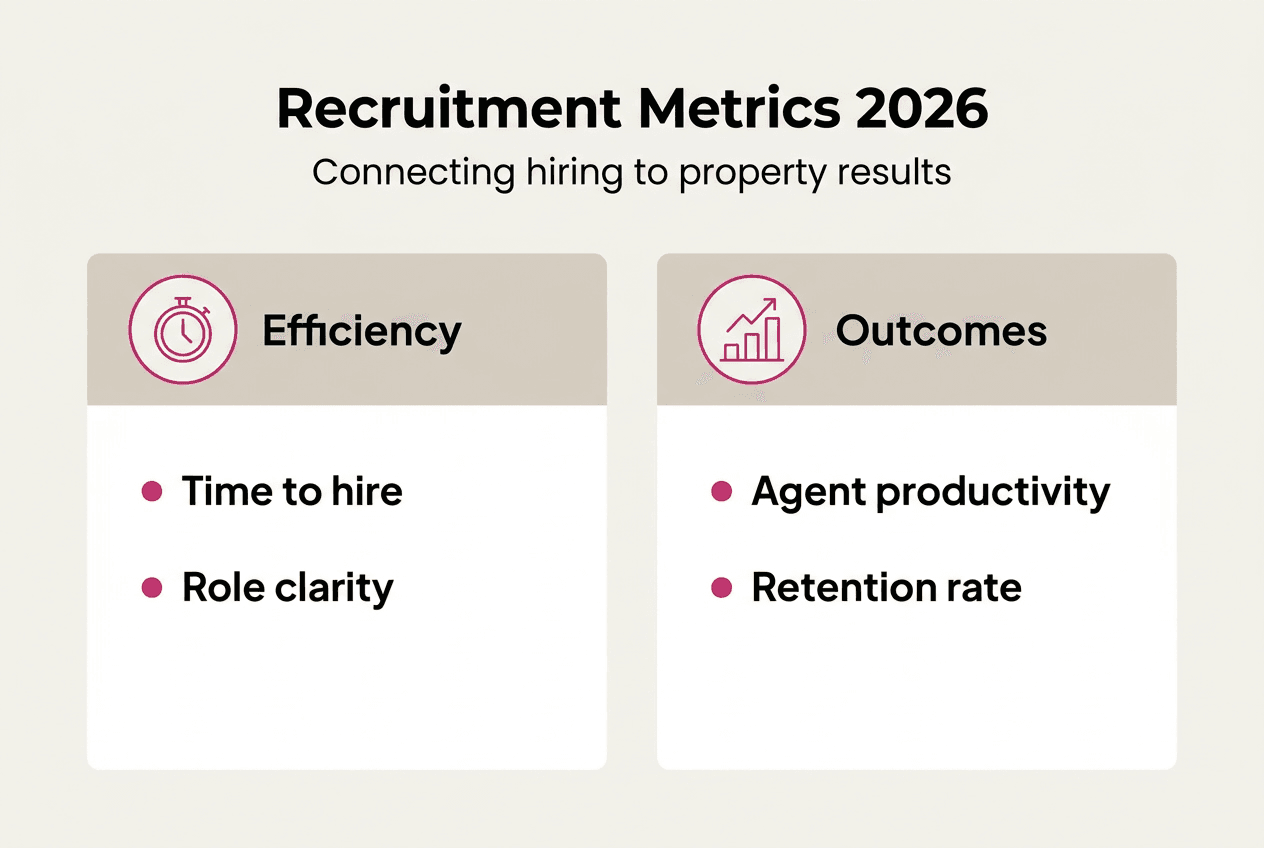
The cost of reactive hiring extends beyond salary. Last-minute hires often command premium compensation because you’re competing for immediately available candidates. You may pay signing bonuses or inflated salaries to secure quick starts. Proactive recruitment gives you negotiating leverage because you’re not desperate.
Balancing recruitment needs across different property sectors requires understanding each area’s unique cycles and challenges. Residential real estate may spike during spring and summer, while commercial property management maintains steadier staffing needs year-round. Learn more about balancing recruitment needs across these diverse segments.
Attracting and engaging top talent: employer branding and strategic outreach
Attracting top talent goes beyond posting jobs; it’s about positioning your company as a desirable place to work. In competitive property markets, the best candidates have multiple options. Your employer brand determines whether they choose you.
Employer branding encompasses your reputation as a workplace, your value proposition to employees, and how you communicate opportunities. Strong brands attract passive candidates who aren’t actively job hunting but would consider the right offer. These passive candidates often represent the highest quality talent because they’re currently successful and selective about moves.
Crafting a compelling employer value proposition requires understanding what matters to property professionals. Beyond compensation, they value:
- Clear career progression paths with defined advancement criteria
- Training and professional development opportunities
- Supportive team culture that celebrates wins and shares knowledge
- Technology and tools that make their work more efficient
- Flexibility in how they structure their workdays and client interactions
- Recognition programs that reward performance publicly
Communicate these elements consistently across all recruitment touchpoints. Your job postings, career page, social media presence, and recruiter outreach should all reinforce the same value proposition. Inconsistency creates confusion and erodes trust.
| Approach | Reach | Candidate Quality | Time Investment | Cost |
|---|---|---|---|---|
| Traditional job posting | Broad but passive | Mixed, many unqualified | Low initial, high screening | Low to moderate |
| Strategic employer branding | Targeted, attracts passive candidates | Higher, self-selected fit | Moderate ongoing | Moderate to high |
| Employee referrals | Limited but trusted | Very high, pre-vetted | Low | Low (referral bonuses) |
| Recruiter partnerships | Extensive, active sourcing | High, professionally screened | Low internal | Moderate to high |
Strategic outreach activates your employer brand. Instead of waiting for candidates to find your postings, you identify and engage them directly. This might involve attending industry events, participating in property management forums, or leveraging LinkedIn to connect with professionals whose experience matches your needs.
Employee testimonials and recognition amplify your employer brand authentically. When current team members share their success stories, career growth, or why they love working for your firm, potential candidates see proof of your value proposition. Video testimonials, social media features, and case studies showcasing employee achievements all strengthen your employer brand.
Pro Tip: Create a structured employee advocacy program where team members share job openings and company updates through their networks. This extends your reach while adding credibility through personal endorsements.
Social media provides powerful channels for authentic engagement. Share behind-the-scenes content showing your team in action, celebrate individual and team wins, and highlight your company culture. This ongoing content keeps your employer brand visible and attractive to potential candidates long before you have open positions.
Developing comprehensive real estate talent acquisition strategies requires integrating employer branding with targeted outreach and relationship building. The goal is creating a talent ecosystem where qualified candidates know about your opportunities and want to join your team.
Explore flexible recruitment solutions with McGlynn Personnel
Navigating the complexities of property sector recruitment requires specialized expertise and extensive networks. McGlynn Personnel offers tailored recruitment solutions designed specifically for real estate, property management, and property development firms. Whether you need permanent placements, contract staffing, or executive search services, our team understands the unique demands of property roles.
Our flexible staffing solutions help you scale teams efficiently during peak periods or special projects. We maintain ready access to qualified property professionals across the UK, EU, US, Middle East, and APAC regions. Our rigorous screening process ensures candidates match both technical requirements and cultural fit. Discover how working with a recruitment agency accelerates your hiring success. Learn more about leveraging contract recruitment to propel growth in your real estate firm.
Frequently asked questions
What is the primary role of recruiters in the property sector?
Recruiters serve as strategic partners who align talent acquisition with business objectives. They build pipelines of qualified candidates, screen for both technical skills and cultural fit, and manage the hiring process from sourcing through onboarding. Effective recruiters understand property sector nuances and can identify candidates who will thrive in specific roles.
How can recruiters help reduce agent turnover in real estate teams?
Recruiters reduce turnover by improving candidate fit from the start. They conduct thorough screenings that assess cultural alignment, realistic job expectations, and long-term career goals. By matching candidates to roles that genuinely suit their strengths and aspirations, recruiters help ensure new hires stay engaged and productive beyond the critical first year.
Why is role specificity important in property recruitment?
Specific role definitions streamline both sourcing and evaluation processes. When recruiters know exactly what skills and experience matter, they can target candidates more effectively and screen applications more efficiently. Candidates benefit too, as clear role descriptions help them self-assess fit before applying, reducing mismatched applications and interview time.
What strategies improve employer branding in real estate recruitment?
Showcase authentic employee success stories and industry recognition through multiple channels. Use social media to share behind-the-scenes content and team celebrations. Develop clear value propositions highlighting career growth, training opportunities, and supportive culture. Encourage employee advocacy where team members share opportunities through their networks, adding credibility through personal endorsements.
How can real estate HR teams forecast talent needs effectively?
Collaborate with business leaders quarterly to review growth projections, market forecasts, and operational plans. Analyze historical hiring patterns and seasonal fluctuations in your specific property sectors. Use CRM data and sales pipeline insights to anticipate staffing requirements 3-6 months ahead. This proactive approach prevents reactive hiring and improves candidate quality significantly.
Recommended
- Sourcing Talent for the Property Technology Sector: The 2026 Recruitment Blueprint – Mcglynn Personnel
- Recruiters for Real Estate Investment Analysts: Securing High-Stakes Talent in 2026 – Mcglynn Personnel
- Real estate development recruitment: your 2026 guide
- Why Partnering With Property Management Recruiters Is a Strategic Advantage – Mcglynn Personnel
- Por qué contratar extranjeros en España: guía 2026
- Employment Law Trends Irvine 2026 – What HR Must Know | Serendib Law Firm