
Finding qualified managerial and technical talent in manufacturing, engineering, and real estate has become increasingly difficult as demand for specialized engineers grows 18% faster than supply. General recruitment approaches often miss the mark, leading to prolonged vacancies and mismatched hires. Specialized recruiters bring targeted industry expertise, niche networks, and proven sourcing strategies that accelerate hiring while improving candidate quality. This article explores how partnering with specialized recruiters delivers faster, more cost-effective hiring outcomes in these competitive sectors.
Table of Contents
- The Recruitment Challenge In Manufacturing, Engineering, And Real Estate
- How Specialized Recruiters Unlock Higher Quality Hires And Efficiency
- Industry-Specific Benefits: Manufacturing, Engineering, And Real Estate Insights
- Avoiding Pitfalls: Selecting And Maximizing Value From Specialized Recruiters
- How McGlynn Personnel Supports Your Specialized Hiring Needs
- Frequently Asked Questions About Specialized Recruiters
Key takeaways
| Point | Details |
|---|---|
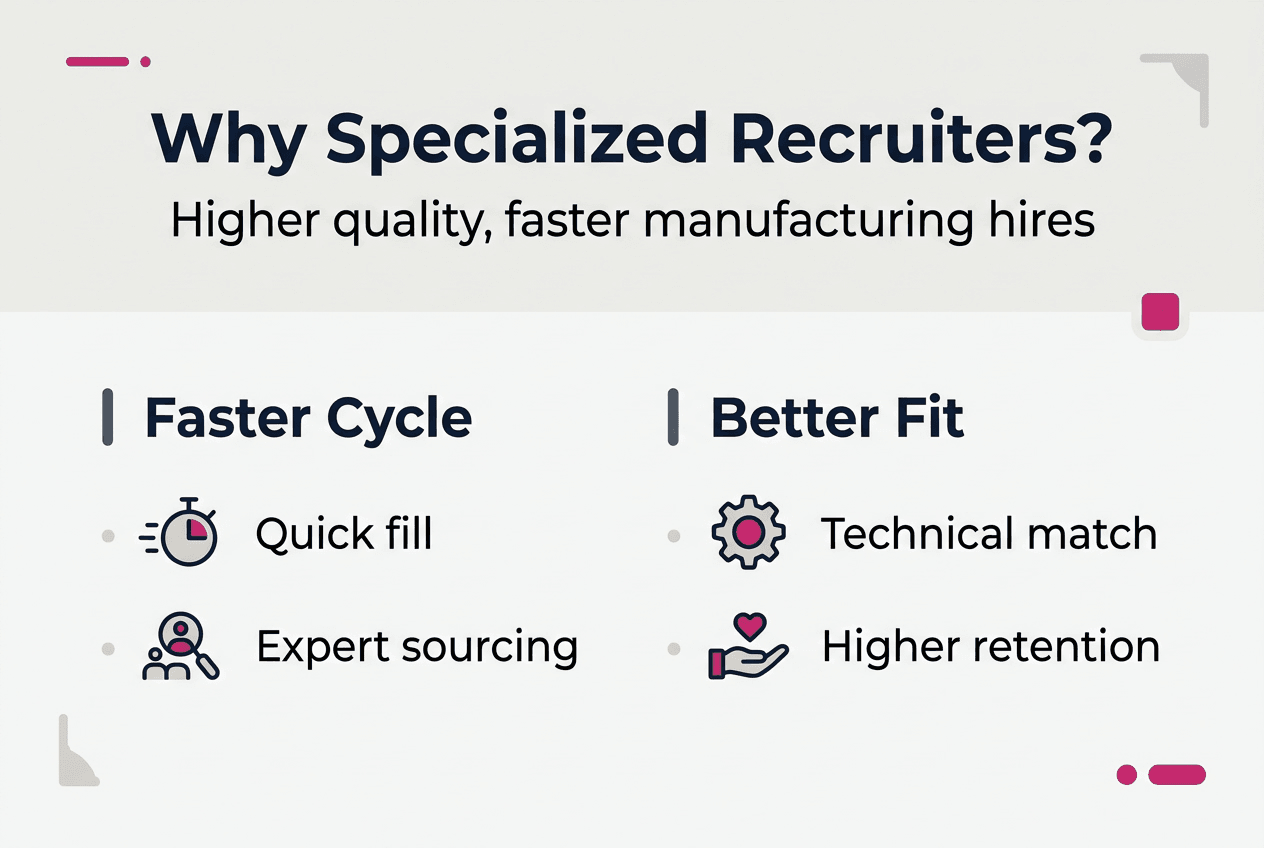
| Faster hiring cycles | Specialized recruiters reduce time-to-hire by 20-30% through targeted expertise and established talent networks. |
| Higher quality candidates | Industry-specific knowledge enables better assessment of technical qualifications, improving hire quality by 15-25%. |
| Improved retention rates | Specialized recruiters achieve 20% higher retention for technical hires through better candidate-employer fit. |
| Cost efficiency | Streamlined processes and lower turnover minimize expensive re-hiring cycles and lost productivity. |
| Access to passive talent | Niche sourcing strategies reach 30-40% more passive candidates unavailable through traditional channels. |
The recruitment challenge in manufacturing, engineering, and real estate
The talent shortage in specialized sectors creates intense competition for skilled professionals. Demand for specialized engineers has grown 18% faster than supply over the past three years, forcing employers to compete aggressively for qualified candidates. Manufacturing facilities need precision engineers familiar with advanced automation. Real estate firms require property managers with complex regulatory knowledge. These roles demand specific certifications, technical expertise, and industry experience that general recruiters struggle to evaluate accurately.
Complex technical qualifications add significant hiring complexity. A manufacturing engineer might need Six Sigma certification, CAD proficiency, and lean manufacturing experience. Real estate managers often require state-specific licensing, property law knowledge, and financial analysis skills. General recruiters lack the technical vocabulary and industry context to assess these qualifications effectively, leading to longer screening processes and frequent mismatches.
General recruiters typically cast wide nets, posting jobs on broad platforms and hoping qualified candidates apply. This reactive approach misses passive candidates who represent the majority of top talent. Without industry networks or specialized job boards, generalists struggle to reach professionals already employed but open to better opportunities. The result is longer vacancy periods, higher costs per hire, and compromised candidate quality.
Specialized recruitment agencies in manufacturing and engineering understand these challenges intimately. They maintain active relationships with professionals in target sectors, know which certifications matter most, and can evaluate technical capabilities accurately. Companies experience a 20-30% reduction in time-to-hire with specialized recruiters, translating directly to reduced vacancy costs and faster project execution.
Key advantages of specialized recruiters include:
- Deep understanding of technical role requirements and industry-specific qualifications
- Established networks within target sectors enabling faster candidate identification
- Ability to assess technical skills and cultural fit more accurately than generalists
- Access to passive candidates through niche channels and proactive sourcing
How specialized recruiters unlock higher quality hires and efficiency
Specialized recruiters bring technical fluency that transforms the hiring process. They speak the language of your industry, understanding the difference between PLC programming and SCADA systems, or commercial versus residential property management. This expertise enables precise job descriptions, accurate candidate screening, and meaningful technical conversations that generalists cannot replicate.
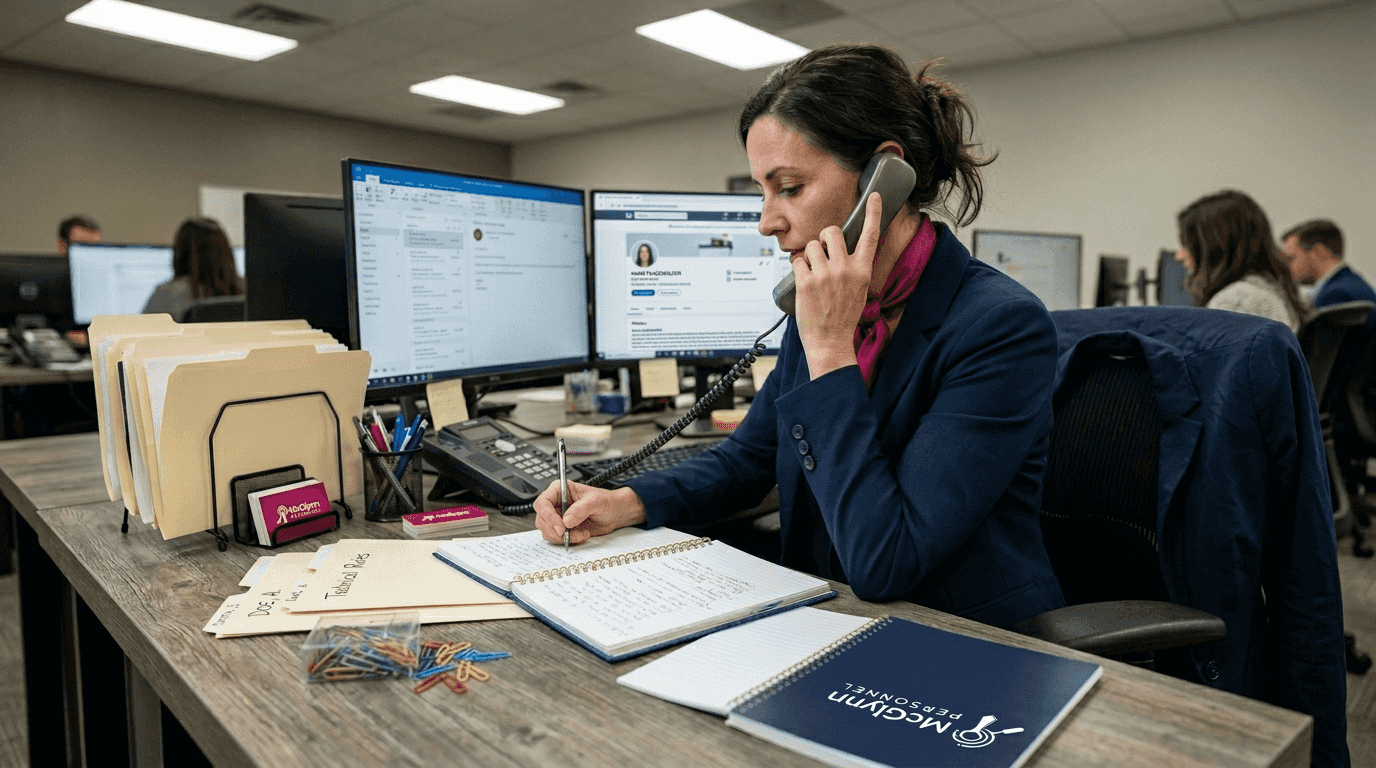
Targeted sourcing strategies access hidden talent pools. Specialized recruiters use niche job boards, industry associations, and professional networks unavailable to general agencies. They attend sector-specific conferences, maintain relationships with passive candidates, and build talent pipelines before positions open. Specialized recruiters are 30-40% more likely to find passive candidates, dramatically expanding your access to top performers already employed elsewhere.
Tailored assessment processes improve candidate fit and reduce costly bad hires. Rather than generic interviews, specialized recruiters design role-specific evaluations testing actual job requirements. A manufacturing recruiter might assess lean methodology knowledge through scenario-based questions. A real estate recruiter evaluates regulatory compliance understanding and client management skills. This precision reduces mis-hires that damage productivity and morale.
Many industry-specific recruitment agencies now integrate AI tools to streamline screening without sacrificing quality. Automated resume parsing identifies qualified candidates faster, while predictive analytics highlight retention risks. These technologies reduce initial screening time by 35%, allowing recruiters to focus energy on relationship building and cultural fit assessment. The combination of human expertise and technological efficiency creates measurably better outcomes.
Building talent pipelines ahead of need shortens future hiring cycles dramatically. Specialized recruiters maintain ongoing relationships with potential candidates, understanding their career goals and timing preferences. When positions open, they already know who might be interested and available. This proactive approach eliminates the weeks typically spent sourcing and initial outreach.
Pro Tip: Request that your specialized recruiter build a talent pipeline for critical roles before vacancies occur, ensuring immediate access to pre-qualified candidates when needs arise.
| Metric | General Recruiters | Specialized Recruiters | Improvement |
|---|---|---|---|
| Time to hire | 45-60 days | 30-40 days | 20-30% faster |
| Candidate quality score | 6.5/10 | 8.2/10 | 26% higher |
| First year retention | 72% | 88% | 22% improvement |
| Passive candidate reach | 25% | 40% | 60% more access |
Industry-specific benefits: manufacturing, engineering, and real estate insights
Manufacturing and engineering recruiters understand the critical importance of certifications and role-specific technical skills. They know which Six Sigma belt level a process improvement role requires, or whether ISO 9001 experience matters for a quality manager position. This knowledge prevents the common mistake of overlooking qualified candidates or advancing unqualified ones based on resume keywords alone.
Real estate recruiters navigate complex licensing requirements and regulatory frameworks that vary by state and property type. They understand the difference between residential and commercial property management, know which certifications add value, and can verify credentials efficiently. Real estate firms using specialized recruiters report a 10-20% decrease in turnover and improved performance, largely due to better regulatory compliance and role fit.
Cultural fit assessment becomes more sophisticated with industry expertise. Specialized recruiters understand the work environments, team dynamics, and professional expectations unique to each sector. A manufacturing recruiter knows whether a candidate thrives in fast-paced production environments or prefers research-focused roles. A real estate recruiter evaluates client interaction preferences and stress tolerance for high-pressure markets.
Specialized recruiters achieve 20% higher retention for technical hires by matching candidates to roles and cultures more accurately. This improvement reduces the substantial costs of turnover, including lost productivity, knowledge drain, and re-hiring expenses. In specialized roles where ramp-up time can exceed six months, retention improvements deliver significant value.
| Sector | Without Specialized Recruiters | With Specialized Recruiters | Key Benefit |
|---|---|---|---|
| Manufacturing | 68% retention, 52 day hiring | 85% retention, 35 day hiring | Faster fills, lower turnover |
| Engineering | 70% retention, 58 day hiring | 88% retention, 38 day hiring | Better technical fit |
| Real Estate | 65% retention, 48 day hiring | 82% retention, 33 day hiring | Improved compliance |
Pro Tip: Prioritize specialized recruiters who demonstrate measurable retention improvements in your specific sector, as this metric directly impacts long-term hiring ROI.
Executive search in manufacturing and engineering requires even deeper industry knowledge, as leadership hires carry higher stakes and longer-term impacts. Specialized recruiters assess strategic thinking, change management capabilities, and industry vision alongside technical credentials. They understand the leadership challenges unique to each sector and evaluate candidates accordingly.
Avoiding pitfalls: selecting and maximizing value from specialized recruiters
Verifying a recruiter’s industry-specific track record prevents costly partnerships with agencies claiming specialization without substance. Request case studies from similar roles, ask for client references in your sector, and evaluate their understanding of your technical requirements during initial conversations. Genuine specialists demonstrate deep knowledge immediately, while generalists struggle with industry terminology and role nuances.
Providing detailed job descriptions and staying involved in candidate screening ensures alignment throughout the process. Many employers delegate too completely, then feel frustrated with candidate quality. Successful partnerships involve regular communication, collaborative screening decisions, and shared responsibility for outcomes. Your recruiter brings sourcing expertise and industry networks, but you provide company culture insights and role-specific priorities.
Maintaining clear communication about expectations, timelines, and evaluation criteria prevents misunderstandings that derail hiring. Establish upfront agreements on candidate presentation formats, feedback timelines, and decision-making processes. Regular check-ins keep both parties aligned and enable quick course corrections when needed.
Common pitfalls to avoid:
- Accepting vague claims of specialization without verifying actual industry experience and placement track records
- Providing generic job descriptions that fail to communicate technical requirements and cultural priorities
- Remaining passive after initial briefing rather than staying engaged throughout candidate evaluation
- Failing to establish clear communication protocols and decision timelines upfront
- Choosing recruiters based solely on cost rather than evaluating quality metrics and retention outcomes
Pro Tip: Establish a formal feedback loop with your recruiter after each candidate interaction, enabling continuous refinement of search criteria and candidate profiles.
Working with a recruitment agency successfully requires treating the relationship as a strategic partnership rather than a transactional service. Share your company’s growth plans, cultural values, and long-term talent needs. This context enables recruiters to identify candidates who fit not just the immediate role but your organization’s trajectory.
Employers should verify recruiters’ industry experience and maintain clear communication to avoid hiring pitfalls. Due diligence in recruiter selection is critical for successful hires in specialized roles. Take time to evaluate multiple agencies, compare their approaches, and select partners who demonstrate genuine sector expertise and cultural alignment with your organization.
How McGlynn Personnel supports your specialized hiring needs
Finding the right talent quickly in manufacturing, engineering, and real estate demands more than generic recruitment approaches. McGlynn Personnel delivers targeted expertise across these specialized sectors, combining deep industry knowledge with proven sourcing strategies that accelerate hiring while improving candidate quality. Our team understands the technical qualifications, certifications, and cultural factors that determine long-term success in specialized roles.
We offer flexible staffing solutions tailored to your specific needs, whether you require contract professionals for project-based work or permanent hires for leadership positions. Our strategic approach focuses on finding talent fast in specialized sectors without compromising quality, leveraging established networks and proactive pipeline development.
Discover why leading employers choose manufacturing recruiters for talent acquisition. Our rigorous screening processes, industry-specific assessments, and commitment to long-term placement success deliver measurable improvements in hiring speed, candidate quality, and retention rates.
Frequently asked questions about specialized recruiters
What distinguishes specialized recruiters from generalists?
Specialized recruiters possess deep technical knowledge of specific industries, enabling accurate assessment of complex qualifications and certifications. They maintain established networks within target sectors, accessing passive candidates unavailable through general channels. Their industry fluency allows meaningful technical conversations and precise role-fit evaluation that generalists cannot replicate.
How can specialized recruiters reduce hiring costs?
Streamlined processes and targeted sourcing reduce time-to-hire by up to 30%, minimizing vacancy costs and lost productivity. Higher retention rates, typically 20% better than general recruitment, eliminate expensive re-hiring cycles. Better candidate quality reduces training costs and accelerates time-to-productivity for new hires.
What should employers look for when selecting a specialized recruiter?
Verify proven experience in your specific sector through case studies and client references. Evaluate their understanding of technical requirements and industry terminology during initial conversations. Ensure they demonstrate clear communication practices, collaborative screening approaches, and measurable track records of retention improvements in similar roles.
Recommended
- Why Use Manufacturing Recruiters to Find Talent? – Mcglynn Personnel
- Manufacturing Recruitment Agency: Precision Placements for Profound Results – Mcglynn Personnel
- The Competitive Edge of Specialized Recruitment Agencies in Manufacturing and Engineering – Mcglynn Personnel
- Executive Recruiters for Manufacturing: Securing Your Next Generation of Leaders – Mcglynn Personnel